Tutorial
How to smoke pork belly: from slab to homemade bacon
EWEthan Wilder (pen name)Published 2026-08-277 min read
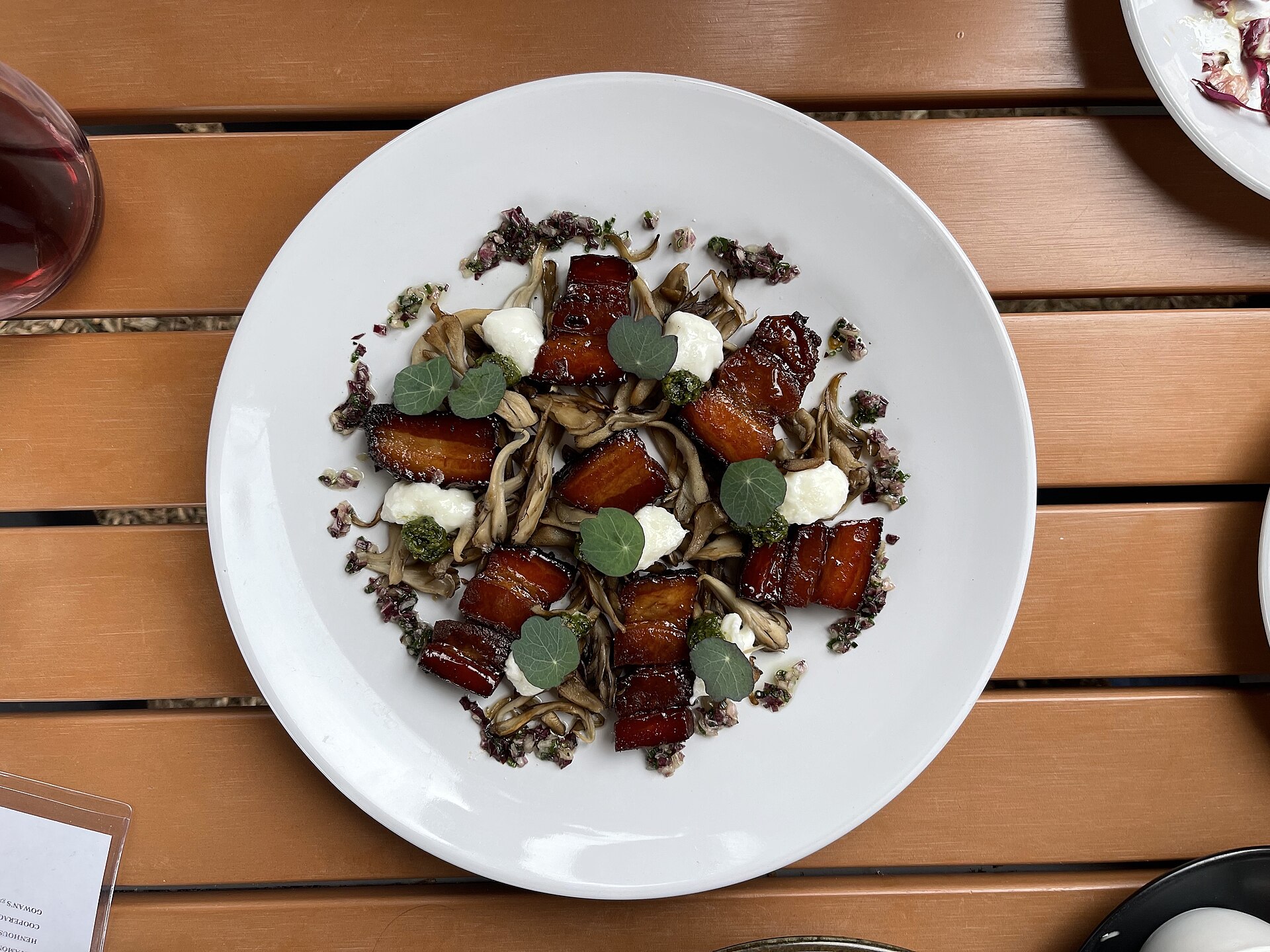
Image source: File:Kivelstadt Cellars & Winegarten - March 2023 - Sarah Stierch 05.jpg · CC BY 4.0 via Wikimedia Commons
Homemade bacon starts with a curing step that must be measured, refrigerated, and followed exactly. After that, the smoke is simpler: dry the slab, hold the cooker steady, finish at the target in the tested recipe, chill it, and slice it cold.
Start with a good slab
Choose a manageable slab of even thickness, trim ragged edges if you like, and score the fat side in a crosshatch so the cure and smoke reach more surface. Oregon State Extension defines the project simply: bacon is cured pork belly, and curing adds salt plus curing salts that keep Clostridium botulinum from growing.
That is why the curing step is not for improvising. Extension recipes specify exact curing-salt doses by weight; follow a tested recipe to the gram, because the protection only works at the intended concentration. A volume spoon that is heaped, packed, or undersized can change the dose enough to matter, so weigh the belly and the cure separately.
- An even-thickness slab cures and smokes more evenly.
- Scoring the fat side adds surface area.
- Curing salts inhibit botulism - doses are not optional.
- Follow a tested recipe and weigh the cure.
Cure in the refrigerator, then rinse
Extension guidance offers two practical home routes: a dry cure rubbed over the belly, or a wet brine it soaks in. Either way the belly rests in the refrigerator - Oregon State's recipe cures 5 to 7 days, flipping the bag daily - and the slab firms up as it cures.
After curing, rinse the belly thoroughly under cold running water to wash surface salt away, then pat it dry. Smoke immediately or hold it uncovered in the refrigerator up to 24 hours, which helps the surface dry for better smoke pickup.
- Dry rub or wet brine - both in the refrigerator.
- Typical cure window: 5 to 7 days, flipped daily.
- A firmer slab is your sign it is ready.
- Rinse well; under-rinsed bacon is overly salty.
Smoke low to the right numbers
Run the smoker indirect and low, tracking the cooker and the meat with separate thermometers. USDA's smoking guidance holds the cooker between 225 and 300 degrees F, while Oregon State's bacon recipe uses 225 to 250 degrees F and roughly three hours for a typical slab.
Two reference points matter on the meat itself. USDA's minimum for whole pork cuts such as belly is 145 degrees F with a 3-minute rest; extension bacon recipes cook higher for texture and keeping quality, and Oregon State finishes at 160 degrees F. Verify with your thermometer and you are covered by both.
- USDA minimum for whole pork cuts: 145 degrees F plus 3 minutes' rest.
- Oregon State's home-bacon target: 160 degrees F.
- At 225 to 250 degrees F, expect about three hours.
- One thermometer for the cooker, one for the meat.
Cool, slice, and store
Oregon State's method cools the slab about an hour, wraps it tightly, and chills it overnight before slicing - cold bacon cuts cleanly. Slice to your thickness, refrigerate the cured bacon up to 7 days, or freeze it vacuum-sealed for best quality within about 4 months.
Smoked fresh, uncured pork follows USDA's general leftovers rule instead: refrigerate within 2 hours, use within 4 days. Label the freezer bags, because cured and uncured slabs look identical.
- Chill overnight before slicing for clean cuts.
- Cured bacon: up to 7 days refrigerated, or frozen.
- Uncured smoked pork: refrigerate within 2 hours, use within 4 days.
- Label everything you freeze.
Sources
Sources used for this page
Ethan Wilder (pen name)
Research-based guides · read the Editorial policy
Keep planning
More in Smoking Guides
- 01How to Season a Flat-Top Griddle: Oil, Layers, and CareTutorial · 6 min read
- 02How to Smoke a Brisket: a First-Timer's Plan From Trim to RestTutorial · 6 min read
- 033-2-1 Ribs: the Method, Temperatures, and TimingTutorial · 6 min read
- 04Smoker vs grill: do you need both?Comparison · 5 min read
- 05Flat-top griddle vs grill: what each does bestComparison · 5 min read