Tutorial
How to Smoke a Brisket: a First-Timer's Plan From Trim to Rest
EWEthan Wilder (pen name)Published 2026-08-156 min read
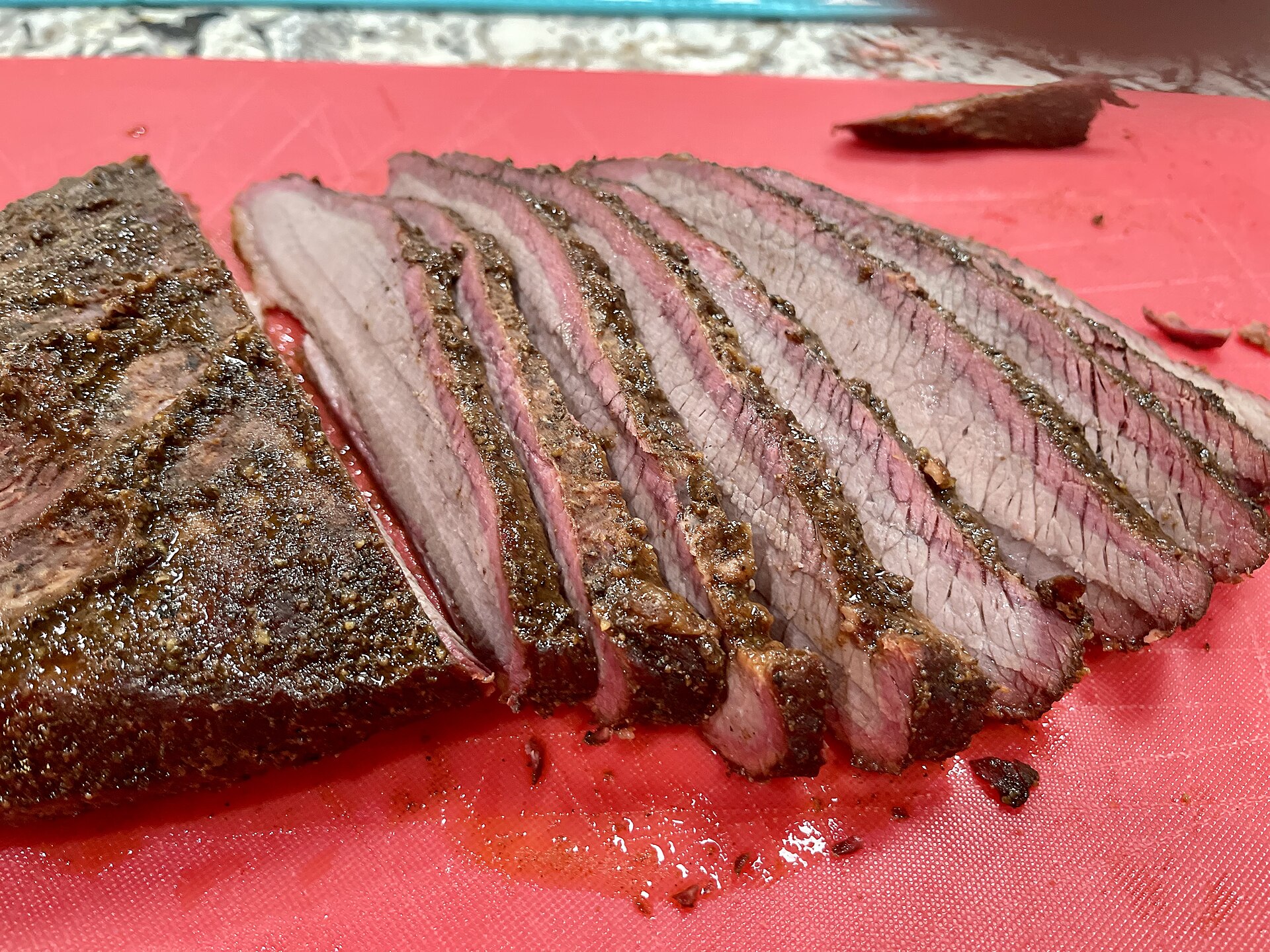
Image source: File:Smoked Brisket with smoke ring.jpg · CC BY-SA 4.0 via Wikimedia Commons
Brisket is a long cook with two separate jobs: manage the fire for hours, then judge tenderness in the flat without rushing the finish. The plan below covers trimming, timing, the stall, wrapping, probing, and resting. Treat the clock as a planning tool and the meat as the final authority.
Know the cut and the safety floor
Brisket is a beef cut from the chest that packs serious connective tissue, which needs hours of gentle heat to soften. That is why barbecue treats it low and slow, and why the cook is measured in hours, not minutes.
The safety floor comes from USDA's Safe Minimum Internal Temperature Chart: 145°F for whole cuts of beef, followed by a three-minute rest. A finished brisket will sit far above that line, but the number is the official check, and color is never a reliable test.
- A full packer includes both the flat and the fattier point.
- Connective tissue softens over hours, so low heat beats high heat here.
- Keep the 145°F USDA minimum in mind even when cooking for tenderness.
Plan the cook before you light it
Give yourself a full day. Trim and season the night before, keep the meat refrigerated until the smoker is steady, and plan on roughly an hour to an hour and a half per pound at the 225-250°F range most barbecue guides use.
Plan the smoker temperature the same way: 225-250°F is common practice, but pellet, charcoal, kamado, and offset cookers each hold heat differently, so trust your cooker's manual and thermometer over any article number.
- Trim the night before so the rub sets overnight in the fridge.
- Bring the smoker to temperature and let it steady before the meat goes on.
- Log the start time and probe readings; brisket cooks are too long to trust memory.
Run the cook: bark, stall, and wrap
Early on, the surface dries and darkens into bark while the interior climbs. Somewhere in the 150-170°F range many briskets stall, as evaporative cooling at the surface holds the internal temperature flat for an hour or more. The stall is normal, not a failure.
Some cooks wrap the brisket in butcher paper or foil once the bark is set, which speeds the climb and protects the surface; others let it ride unwrapped. Both routes work, and the right call depends on your bark, your schedule, and your cooker.
Weather changes the math too, so read your probe, not the forecast.
Decide doneness by feel, not by clock
Most barbecue guides finish brisket somewhere around 195-205°F, but that is a texture target, not a USDA safety number, and finished briskets vary. The practical test is probe tenderness: a thermometer or skewer should slide into the flat with little resistance, like warm butter.
Patience pays at the end: pulling early because the clock says so is the classic first-timer mistake, and if the probe meets resistance, the meat needs more time even when the readout looks right.
- Probe the flat, not the point, to judge the leaner half.
- Tenderness beats the clock every time.
- A steady temperature beats a perfect temperature.
Rest before you slice
Resting lets juices redistribute. USDA's three-minute rest is the safety minimum for whole cuts of beef; brisket benefits from far longer, and many cooks hold the wrapped meat in a warm cooler for an hour or more before slicing.
Slice against the grain and cut only what you will serve. USDA guidance treats the 40-140°F range as the danger zone, so keep cooked meat hot and refrigerate leftovers promptly.
- Rest wrapped in a cooler to keep the meat warm and moist.
- Cut against the grain for tender slices.
- Refrigerate leftovers within about two hours of serving.
Sources
Sources used for this page
Ethan Wilder (pen name)
Research-based guides · read the Editorial policy
Keep planning
More in Smoking Guides
- 01How to Season a Flat-Top Griddle: Oil, Layers, and CareTutorial · 6 min read
- 023-2-1 Ribs: the Method, Temperatures, and TimingTutorial · 6 min read
- 03How to Smoke Pulled Pork: Pork Shoulder BasicsTutorial · 6 min read
- 04Smoker vs grill: do you need both?Comparison · 5 min read
- 05Flat-top griddle vs grill: what each does bestComparison · 5 min read