Comparison
Smoker vs grill: do you need both?
EWEthan Wilder (pen name)Published 2026-07-265 min read
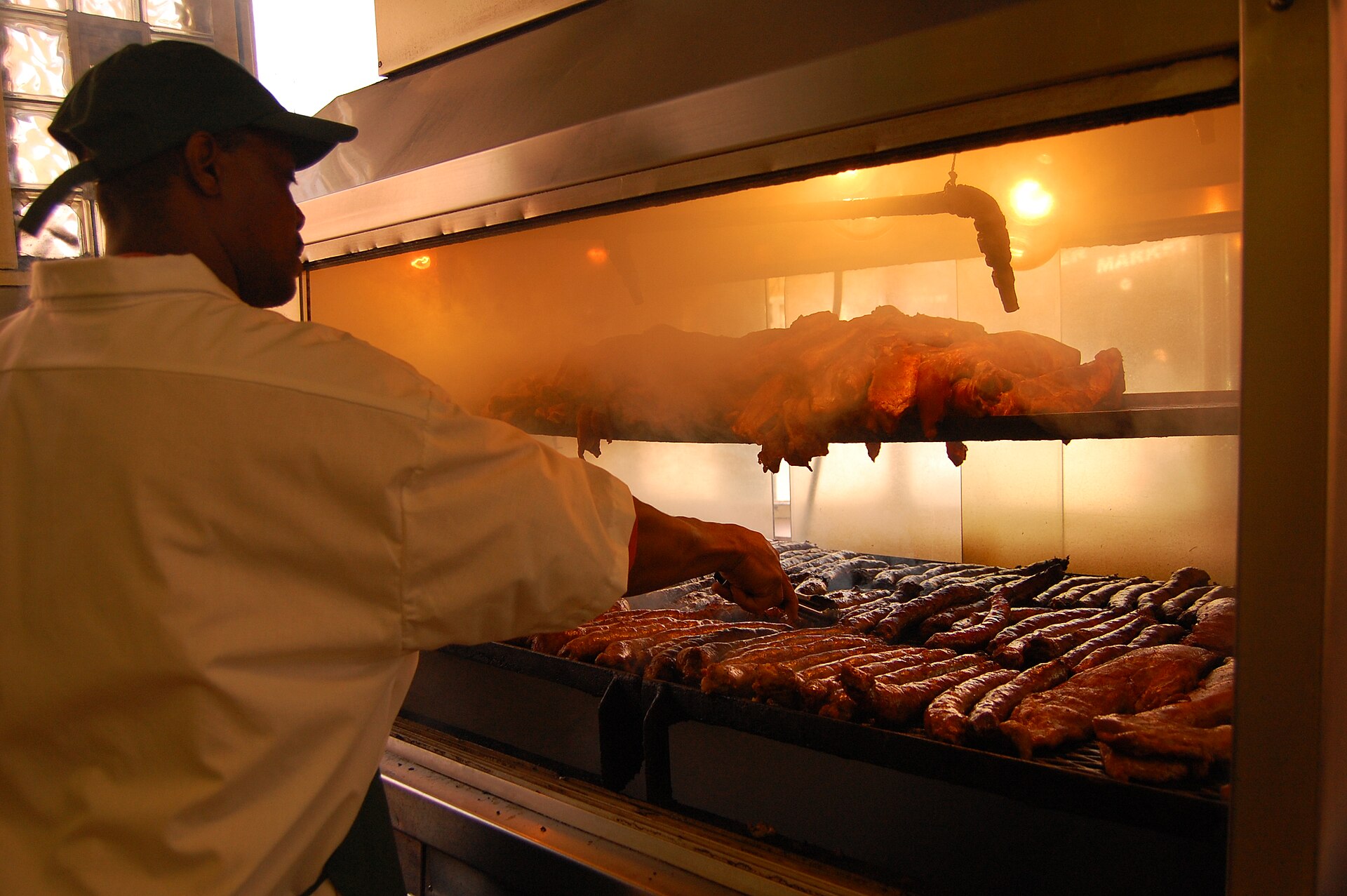
Image source: File:Turning the Meat in a barbecue smoker chicago.jpg · CC BY 2.0 via Wikimedia Commons
A grill is built for a quick sear; a smoker is built for a long, gentle cook. The choice gets easier when you start with your normal week: how often you grill, how often you smoke, how much food you make, and how much fire tending you enjoy.
Hot and fast vs low and slow
Grilling is a short, high-heat cook: burgers, steaks, chops, chicken pieces, and vegetables go over a hot grate and come off in minutes, browned and charred. Smoking is the opposite. Hardwood smoke and low chamber heat work on tougher, fattier cuts such as brisket, pork shoulder, and ribs for hours, until connective tissue breaks down and the meat turns tender.
Those two jobs explain the different designs. A grill keeps the fire close to the food and gets hot quickly. A smoker is built to hold a gentle, steady temperature while smoke moves around the meat. If your week is mostly quick grills and your weekends are long smokes, you are really trying to satisfy two different workloads.
When one machine can do both
Two cooker families are designed to cover both jobs. Wood pellet grills feed hardwood pellets from a hopper into a fire pot, with a fan moving heat and smoke and a controller holding the temperature you set, so the same cooking surface can smoke low or sear high. Ceramic kamados use thick, insulating walls and adjustable airflow to span a similar range on one cooker.
A covered charcoal kettle is a lower-cost version of the same idea: bank the coals to one side, set the meat on the other, and close the lid for a modest smoke, then open the vents for direct grilling later. These hybrids are not a substitute for a large, dedicated smoker on serious overnight cooks, but they answer the do-I-need-both question for most backyard schedules.
If you buy one, buy for your dominant job
Start with how often each style actually appears in your calendar. Cooks who grill a few nights a week and smoke a handful of times a season are better served by a capable grill they will really light, with wood chips or chunks added when smoke is wanted. Cooks who plan regular ribs, pork butts, and briskets will get more from a cooker built to smoke well.
Match the category to your habits, then choose within it by size, materials, and features that fit your patio and your budget.
- Weeknight griller: buy the grill you will use, not the smoker you won't.
- Smoke a few times a season: a hybrid cooker (pellet grill or kamado) covers it.
- Frequent all-day smokes: a dedicated smoker wins on capacity and stability.
- One grill, two jobs: set up a two-zone fire on any covered charcoal cooker.
Cook to temperature, not to time
Whatever you choose, doneness comes from the meat's internal temperature, not from the cooker. The USDA safe minimum internal temperature chart lists 145°F for whole cuts of beef, pork, and lamb with a three-minute rest, 160°F for ground meat, and 165°F for all poultry, and those targets apply whether the meat was grilled or smoked.
For this comparison, the useful checkpoint is workload: decide whether your normal cook is a twenty-minute sear or an overnight hold, then size the cooker around that job. A probe thermometer confirms the food; the cooker category only determines how much tending gets you there.
Sources
Sources used for this page
Ethan Wilder (pen name)
Research-based guides · read the Editorial policy
Keep planning
More in Comparisons
- 01Flat-top griddle vs grill: what each does bestComparison · 5 min read
- 02Pellet grill vs gas grill: which matches your cooking styleComparison · 5 min read
- 03Pellet grill vs charcoal: smoke flavor, cost, and commitmentComparison · 5 min read
- 04How to Choose a Pellet Grill: Size, Features, and What to SkipEquipment · 5 min read
- 05Pellet Grills 101: How They Work and Who They Actually SuitEquipment · 5 min read