Comparison
Pellet grill vs charcoal: smoke flavor, cost, and commitment
EWEthan Wilder (pen name)Published 2026-08-015 min read
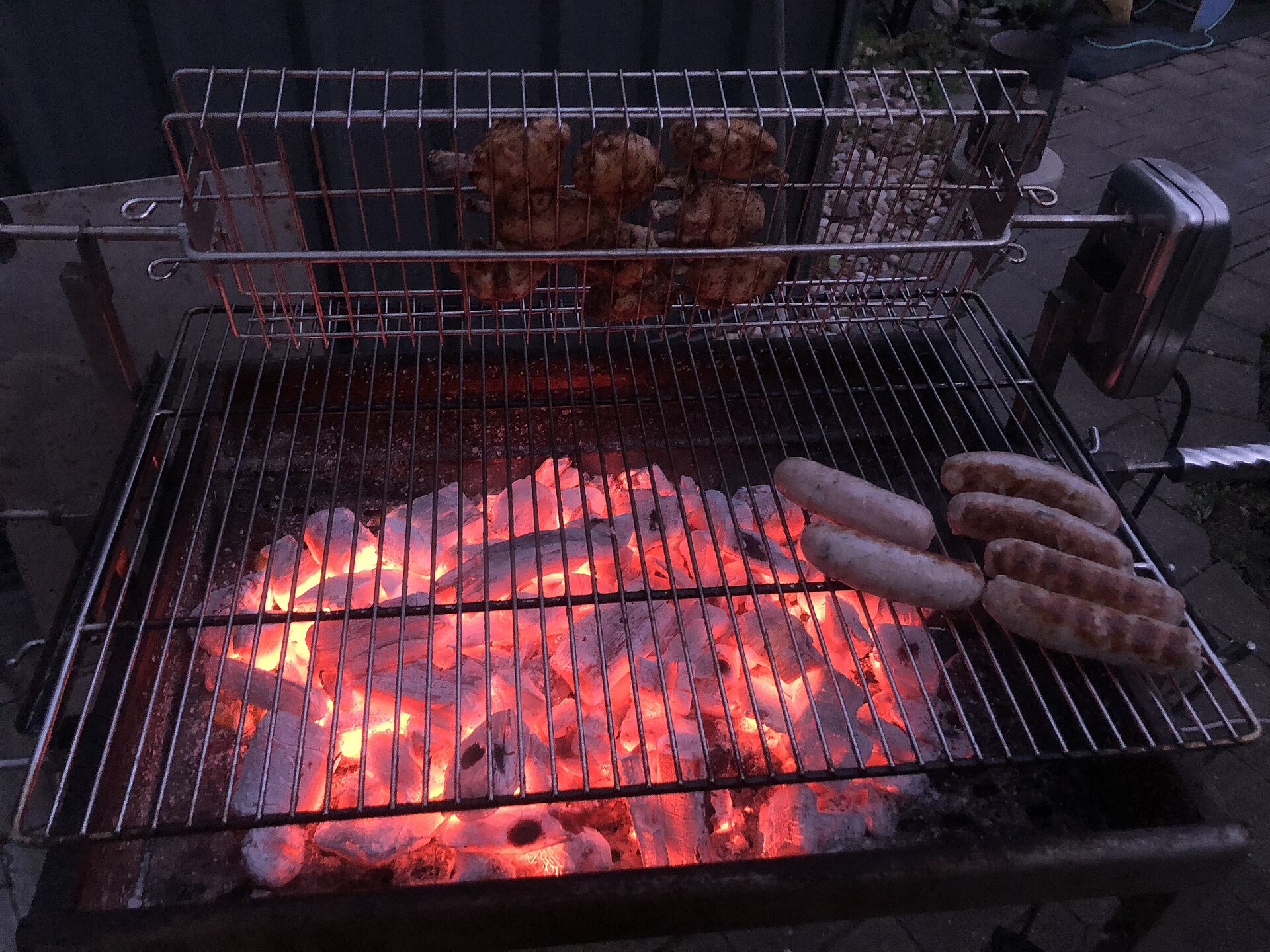
Image source: File:Charcoal BBQ.jpg · CC BY-SA 4.0 via Wikimedia Commons
Pellet and charcoal cookers both burn wood, but the experience is almost opposite. Charcoal puts the fire in your hands; a pellet grill moves much of that work into the hopper, auger, fan, and controller. The right choice depends on whether you want to tend the fire or leave it running.
Two ways to burn
Charcoal cooking means managing a live fire: light briquettes or lump charcoal, arrange it for direct or indirect heat, and steer the temperature with vents and coal placement. It is hands-on, and nearly every cook begins with lighting and waiting for coals to settle.
A pellet grill automates most of that. Pellets feed from the hopper into the fire pot automatically, a fan circulates heat and smoke, and a controller holds the temperature you set. Manufacturers describe the result as oven-like control with wood-fired flavor, at the price of needing electricity and a few more moving parts.
Smoke flavor, two characters
Charcoal adds its own subtle smokiness, especially with lump charcoal, and most charcoal cooks add wood chunks or chips to push the flavor further. Pellets are compressed hardwood, so a pellet grill produces steady wood smoke on its own, in whatever species you choose, from hickory and oak to apple and cherry.
Which tastes better is personal, and no reference can settle that for you. The structural difference is real, though: charcoal lets you throw big smoky flavor at food quickly, while pellets give consistent wood flavor across a long, unattended cook.
Fuel cost and commitment
Fuel prices vary by region and season, so the practical comparison is local: put the per-pound pellet price beside the per-bag charcoal price, adjust for how hot and how long you cook, and include the modest electricity a pellet grill draws. Up-front prices in both categories also span a wide range.
Commitment differs more than price. Charcoal asks for hands-on time at every cook: lighting, tending, vent adjustment, and ash cleanup. A pellet grill moves the effort to planning: keep the pellets dry and the hopper full, and the cooker holds temperature while you do other things.
Cleanup and maintenance
Both cookers make ash. Let charcoal ash cool completely before you touch it, then move it to a metal container for disposal; hot ash can start fires, so never empty it into plastic bins or trash bags. Pellet grills also accumulate ash in the fire pot, and their fan, auger, and controller follow the manufacturer's cleaning schedule, with the unit covered or sheltered from weather.
As categories, a charcoal cooker is a simple machine with few parts to fail, while a pellet grill is an appliance with more to maintain. In exchange, pellet owners trade that maintenance for repeatable temperature and smoke without babysitting.
Who each cooker fits
The practical tie-breaker is attention. Charcoal rewards someone willing to watch vents and coals; pellets reward someone who prefers checking a hopper and controller. Either way, verify the finished food with USDA's 165°F poultry, 160°F ground-meat, or 145°F whole-cut target plus a three-minute rest.
- Enjoy fire tending and want maximum hands-on control: charcoal.
- Want set-and-forget smoking with wood flavor on weeknights: pellet.
- The live fire is part of the entertainment: charcoal.
- Consistent results matter more than ritual: pellet.
Sources
Sources used for this page
Ethan Wilder (pen name)
Research-based guides · read the Editorial policy
Keep planning
More in Comparisons
- 01Smoker vs grill: do you need both?Comparison · 5 min read
- 02Flat-top griddle vs grill: what each does bestComparison · 5 min read
- 03Pellet grill vs gas grill: which matches your cooking styleComparison · 5 min read
- 04How to Choose a Pellet Grill: Size, Features, and What to SkipEquipment · 5 min read
- 05Pellet Grills 101: How They Work and Who They Actually SuitEquipment · 5 min read