Reference
Safe Internal Meat Temperatures: The USDA Chart Every Cook Should Know
EWEthan Wilder (pen name)Published 2026-08-114 min read
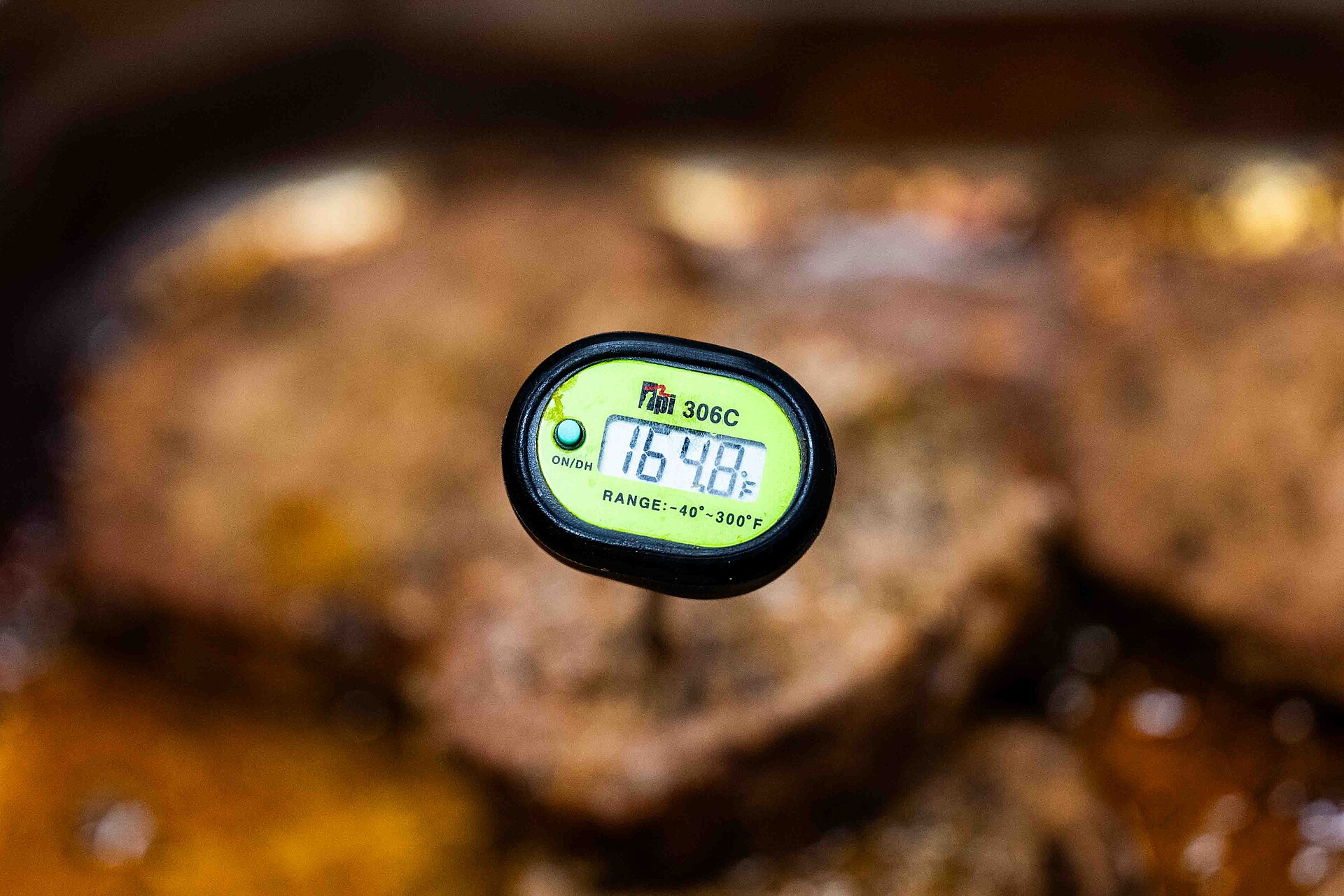
Image source: File:Yes, Chef! (8658136).jpg · Public domain via Wikimedia Commons
A thermometer is useful only when the reading is taken in the right place and compared with the right row on the USDA chart. This reference separates safety temperatures from texture preferences, explains rest time, and shows how to check meat on a grill, smoker, or in the refrigerator after cooking.
The core USDA numbers, all in one place
The rows below come from the USDA FSIS Safe Minimum Internal Temperature Chart. Cook food to these minimum internal temperatures, as measured with a food thermometer, before removing it from the heat source. You may cook higher for personal preference, but never lower.
- Beef, pork, veal, and lamb steaks, chops, and roasts: 145 °F, then rest at least 3 minutes
- Ground meats, such as burgers and meatloaf: 160 °F
- All poultry, including whole birds, parts, and ground poultry: 165 °F
- Fish and shellfish: 145 °F
- Eggs: 160 °F
The rows the holidays add: ham, leftovers, casseroles
Two more rows matter around the holidays. Uncooked fresh or smoked ham needs 145 °F with the same at-least-3-minute rest as other whole cuts. A fully cooked ham only needs reheating: 140 °F for hams packaged in USDA-inspected plants, and 165 °F for all others, since you cannot always know how it was handled before you bought it.
Leftovers and casseroles both sit at 165 °F in the chart. Leftover meat was safe when cooked, but handling and storage can reintroduce bacteria, so the reheat target matches poultry: 165 °F, or until hot and steaming.
Rest time is part of the rule, not a suggestion
For steaks, chops, and roasts, USDA lists 145 °F and allow to rest for at least 3 minutes as a single requirement. During that rest the meat stays hot enough to finish the work the heat started, which is why pulling a steak at 145 °F and slicing it at once is not the same as pulling it at 145 °F and waiting.
Ground meats at 160 °F and poultry at 165 °F carry no rest requirement in the chart. The safe reading is the same for every row: the number is the temperature in the thickest part of the food at the moment you remove it from the heat, and for the rows with a rest, the rest counts.
Measure it right, or the numbers mean nothing
USDA's food thermometer guidance is specific because a reading from the wrong spot is not a reading at all: the probe goes in the thickest part, away from bone, fat, and gristle, and thin foods should be probed from the side so the sensor reaches the center.
Check large or uneven cuts in several places and test each piece separately. Trust the thermometer over appearance, since USDA states that visible signs such as color change are not a reliable way to judge doneness.
- Probe thin foods from the side so the sensor reaches the center
- Check big or uneven cuts in several spots, and test each piece on its own
- Verify accuracy with the ice-water test: an instant-read should register 32 °F
On a grill or smoker, then holding and reheating
Low-and-slow cooking makes the rules sharper. USDA advises smoking only fully thawed meat, because a smoker's low heat cannot thaw safely and the meat would linger in the 40–140 °F danger zone. It also calls for two thermometers: one on the cooker air, kept in the 225–300 °F range, and one in the food. A large cut's surface can read done while its center is still unsafe, so the numbers are internal temperatures, not grill times.
After cooking, the danger zone frames everything else: bacteria multiply fastest between 40 °F and 140 °F. Keep hot food at 140 °F or warmer until serving, never leave perishable food out more than 2 hours, or 1 hour above 90 °F, and refrigerate leftovers in shallow containers within that window.
Reheat leftovers thoroughly to 165 °F, and use poultry leftovers within 3 to 4 days or freeze them. Every number on this page comes from USDA FSIS pages anchored by the Safe Minimum Internal Temperature Chart; if anything here ever differs from those official pages, trust the USDA page.
Sources
Sources used for this page
Ethan Wilder (pen name)
Research-based guides · read the Editorial policy
Keep planning
More in Reference
- 01How to Smoke a Turkey for Thanksgiving: A Practical Timeline and Temperature GuideSeasonal · 3 min read
- 02Grill and Smoker Gifts: Match the Tool to the CookSeasonal · 3 min read
- 03Smoker vs grill: do you need both?Comparison · 5 min read
- 04Flat-top griddle vs grill: what each does bestComparison · 5 min read