Seasonal
How to Smoke a Turkey for Thanksgiving: A Practical Timeline and Temperature Guide
EWEthan Wilder (pen name)Published 2026-08-073 min read
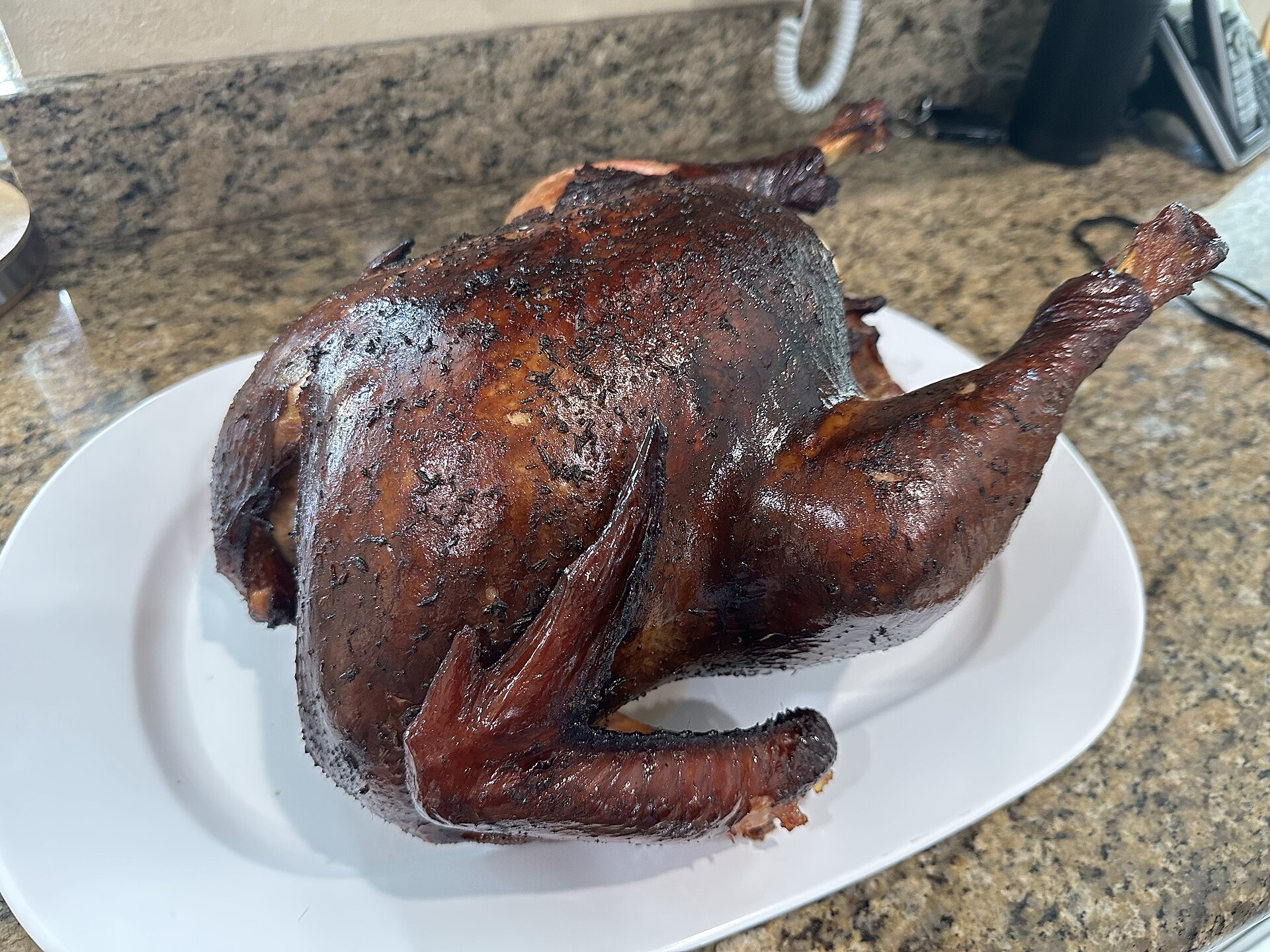
Image source: File:A whole smoked turkey cooked for Thanksgiving dinner.jpg · CC BY-SA 4.0 via Wikimedia Commons
A smoked turkey is a scheduling exercise: thawing, brining, smoker warm-up, cooking, resting, and holding all have to fit before dinner. Use the USDA timing and temperature checks below as the planning baseline, then leave room for a late finish. This is a method guide, not a recipe list, and it names no brands.
Buy the right bird, then count backward
USDA suggests about 1 pound of turkey per person for a fresh or frozen bird, which covers dinner plus welcome leftovers. For a frozen bird the calendar hangs on one rule: refrigerator thawing takes about 24 hours for every 4 to 5 pounds at 40 °F or below.
Work backward from serving time. USDA's window for a 12- to 16-pound bird is 3 to 4 days, and 4 to 5 days for a 16- to 20-pound bird, so a frozen 14-pounder should hit the refrigerator about four days out. Keep it wrapped on a tray; thawed, it can rest 1 to 2 days refrigerated before smoking.
Out of time? Cold water thaws at about 30 minutes per pound, with the water changed every 30 minutes, but the bird must cook immediately once thawed, so finish that step the night before, not the morning of the meal.
Brine or dry-brine: optional flavor, same safety target
Brining changes flavor and moisture, never the safety number: the bird still must reach 165 °F inside. This page uses a common wet- or dry-brine approach: keep the bird fully refrigerated, discard used liquid, and follow the official recipe or product directions for the exact salt formula.
A dry brine is another common option. Rub it on according to the recipe you are using, keep the bird cold for no more than 2 days, and pat the skin dry before smoking; the brine ratio on this page is a practical example, not a USDA formula.
Smoke day: thawed bird, two thermometers
Smoke only a fully thawed bird. USDA warns that a smoker's low heat cannot thaw meat safely, leaving it in the 40–140 °F danger zone, and advises against partially cooking poultry and finishing it later, so cook the bird through in one pass.
Hold the cooker air in the 225–300 °F range USDA gives for smokers, and expect a long cook: the agency notes smoking can run 4 to 8 hours depending on the meat, size, and weather. That is why you want two thermometers, one in the bird and one reading the cooker.
Run the smoker outdoors, well ventilated and away from trees, shrubbery, and buildings, with commercial charcoal and approved starters. A drip pan of water under the bird catches fat and limits flare-ups; soaked chips add smoke without spiking the temperature.
Done at 165 °F, then rest, hold, and store
USDA's minimum for all poultry is 165 °F by food thermometer: check the innermost part of the thigh and wing and the thickest part of the breast, since color and juices are not a reliable safety test.
A stuffed bird is safe only when the stuffing center also hits 165 °F, which adds time, so roasting the stuffing in a pan is the easier call. Let the bird stand about 20 minutes before carving, then serve or hold it at 140 °F or warmer.
Refrigerate leftovers in shallow containers within 2 hours, use them within 3 to 4 days or freeze, and reheat to 165 °F.
Sources
Sources used for this page
Ethan Wilder (pen name)
Research-based guides · read the Editorial policy
Keep planning