Tutorial
How to Season a Flat-Top Griddle: Oil, Layers, and Care
EWEthan Wilder (pen name)Published 2026-08-136 min read
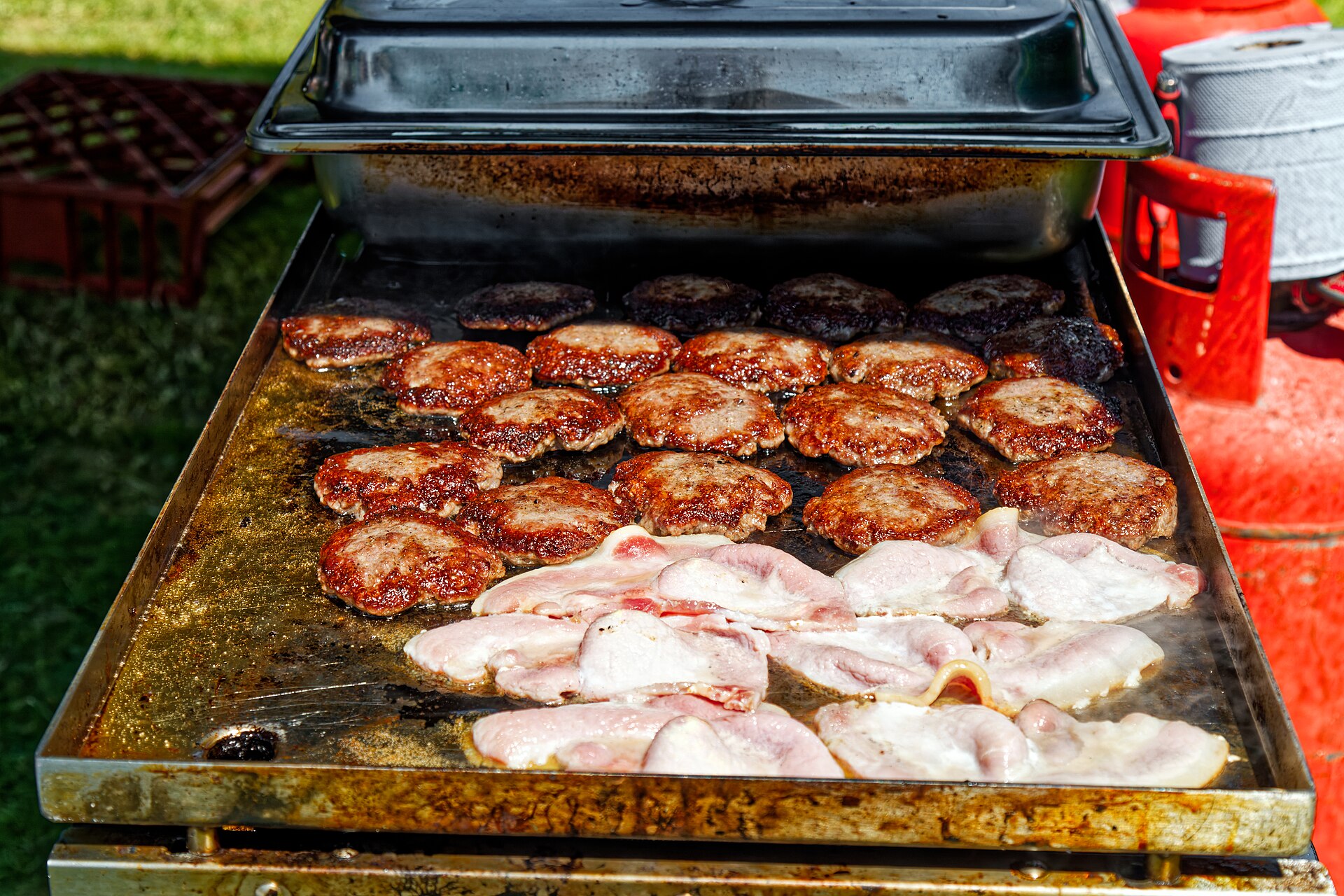
Image source: File:Griddled hamburger and bacon at Copped Hall open day event, Essex, England.jpg · CC BY-SA 4.0 via Wikimedia Commons
Seasoning a new flat-top griddle means building a thin layer of bonded cooking oil on clean steel. The first session matters, but the surface keeps changing with use. Use the maker's heat and oil instructions for your model, then use the checks below to tell whether a layer bonded or simply pooled.
Why a new griddle needs seasoning
Manufacturers describe seasoning as using heat to bond cooking oil to the steel plate. The bonded layers protect the griddle against rust and create a natural, stick-resistant cooking surface, which is why a factory-fresh cooktop behaves so differently from one that has seen a season of burgers.
Seasoning is not a one-time event. It builds, wears, and rebuilds as you cook, scrape, and re-oil, which is why a plate that starts out patchy usually evens out after a handful of cooks.
- Bare steel rusts quickly; a seasoned layer shields it.
- The dark coating is polymerized oil, not burned-on food.
- First-seasoning layers matter most on a brand-new plate.
The first seasoning, step by step
Start with a clean, dry plate. Blackstone's guidance is representative: gently wash the surface with soap and water to remove shipping dust and debris, rinse it, and dry it fully before lighting the burners.
Heat the griddle on high until the plate begins to discolor, then use tongs with a paper towel or cotton cloth to spread a thin layer of oil across the whole surface, including the side walls. Let the layer smoke until it stops, which signals the oil has bonded, then repeat; Blackstone suggests three to five layers for the initial seasoning. Your model's manual may call for different heat and timing, so treat those figures as a starting point, not a rule.
Work in thin passes. If oil gathers in shiny puddles, wipe it thinner before the next heating cycle; a sticky brown patch usually means too much oil, while a dry gray patch needs another light coat. Let the plate cool enough to handle safely before wiping, and keep oily towels away from the burner and other ignition sources.
- Use a high smoke-point oil or the conditioner your maker sells.
- Keep each layer thin; pooled oil turns tacky instead of bonding.
- Walls and corners season slower than the center, and that is normal.
Between cooks and after cooking
Most makers recommend a light oiling after each cook, once the plate is cool enough to handle safely. The routine is simple: scrape off residue, wipe the surface clean, apply a thin coat of oil, and spread it before storing the griddle.
If food sticks during the first few cooks, that is expected. The manufacturer notes that seasoning evens out as the plate builds layers, so the fix is usually more cooking and more light oiling, not a full re-season.
Rust spots do not always require stripping the whole plate. Scrub the affected area back to clean steel, dry it over heat, and rebuild that section with thin coats. Strip and restart only when the surface is broadly gummy, flaking, or contaminated.
- Store with a light oil coat to protect against moisture.
- A sticky, tacky finish usually means too much oil was left to pool.
- Follow your maker's seasoning and storage steps for the exact routine.
A note on temperatures and safety
Seasoning involves cooktop heat settings, not food-safety temperatures, so no USDA internal-temperature numbers apply to the process itself. If you will also sear or smoke meat on that surface, keep USDA's safe minimums in mind for what you cook on it: 145°F for whole cuts of beef and pork with a three-minute rest, 160°F for ground meat, and 165°F for poultry.
Outdoor cooking has its own rules: run the griddle in a well-ventilated outdoor space, keep it away from doors and windows, and let oiled paper towels and any ash cool fully before you throw them away.
- Check your griddle's manual for recommended heat settings.
- Verify any meat safety number on the USDA FSIS temperature chart.
- Different griddles, oil types, and climates change results, so judge by what you see.
Sources
Sources used for this page
Ethan Wilder (pen name)
Research-based guides · read the Editorial policy
Keep planning
More in Smoking Guides
- 01How to Smoke a Brisket: a First-Timer's Plan From Trim to RestTutorial · 6 min read
- 023-2-1 Ribs: the Method, Temperatures, and TimingTutorial · 6 min read
- 03How to Smoke Pulled Pork: Pork Shoulder BasicsTutorial · 6 min read
- 04Smoker vs grill: do you need both?Comparison · 5 min read
- 05Flat-top griddle vs grill: what each does bestComparison · 5 min read