Tutorial
How to smoke a whole chicken: even cook and crisp skin
EWEthan Wilder (pen name)Published 2026-08-257 min read
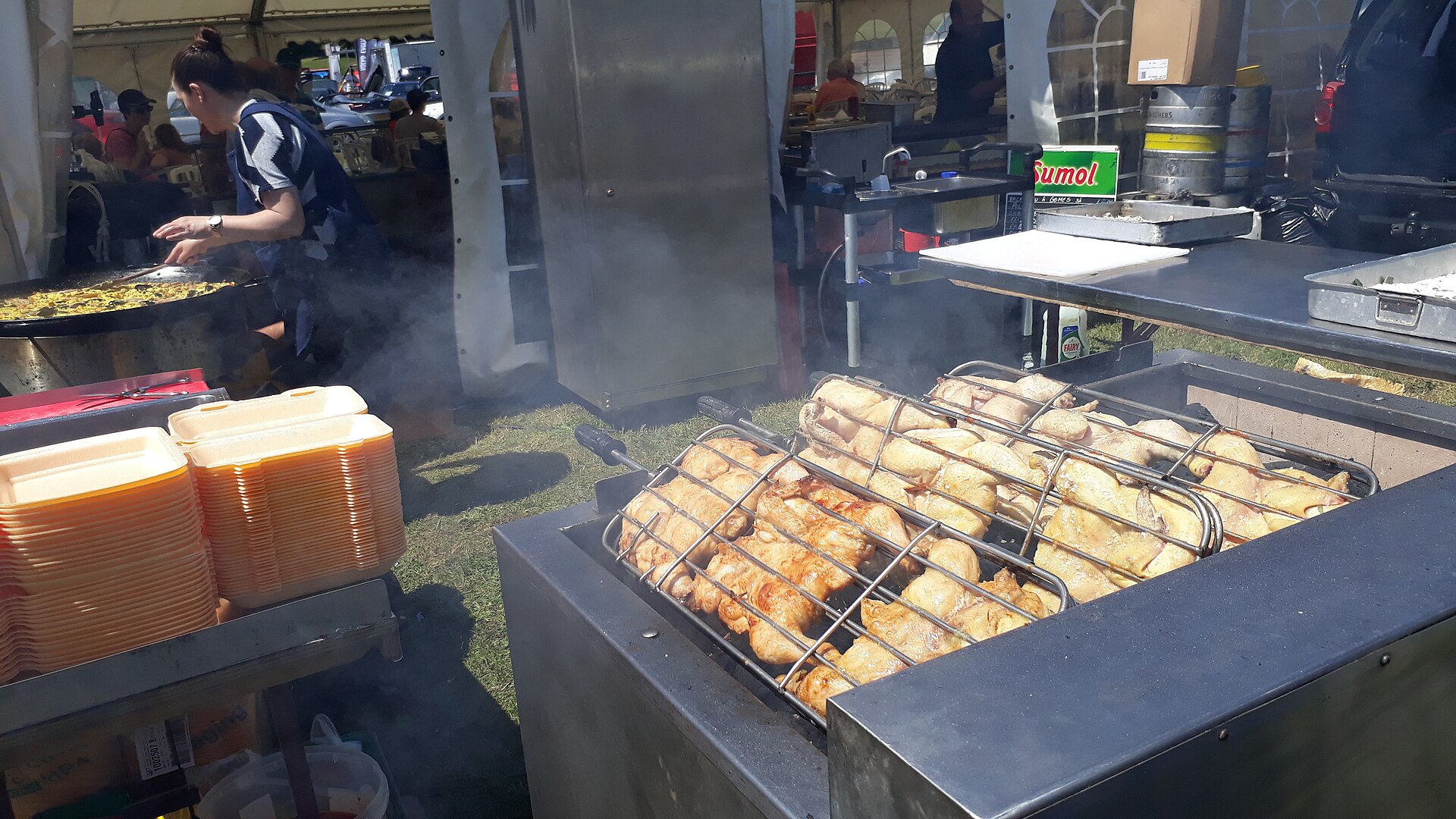
Image source: File:Chicken on the BBQ Spit (47980231842).jpg · CC BY 2.0 via Wikimedia Commons
A whole chicken asks you to solve three problems at once: the breast can dry out, the legs need more time, and low heat can leave the skin soft. The method below uses indirect smoke, separate cooker and meat readings, and USDA checkpoints at the thigh, wing, and breast.
Why whole chicken is tricky
Breast meat dries out quickly once done, legs and thighs take longer to come up, and skin renders best at higher heat - yet every part must clear the same line: USDA recommends whole poultry at 165 degrees F, checked in the innermost thigh and wing and the thickest part of the breast.
So a chicken is a balancing act, not a set-and-forget cook. Plan to check several spots and treat the last stretch as active time.
- White and dark meat come up at different rates.
- USDA minimum for whole poultry: 165 degrees F everywhere.
- Skin needs higher heat to crisp; low heat alone does not do it.
- If stuffed, the stuffing center must also reach 165 degrees F.
Prep: brine, then dry the skin
Brining is optional but common. This page uses a common wet- or dry-brine approach: keep the poultry refrigerated throughout, discard the used liquid, and finish the brine within 2 days. Follow the official recipe or product directions for the exact salt formula; the bird still must reach 165 degrees F.
Either way, pat the skin thoroughly dry before the bird goes in. Surface moisture steams the skin instead of letting it brown.
- Brine in the refrigerator, never on the counter.
- A common dry-brine starting point is roughly 1 tablespoon kosher salt per 5 pounds; use the exact formula from the recipe or product directions you choose.
- Discard used brine; never reuse raw marinade without boiling it first.
- Dry skin helps it crisp.
Smoke low and indirect
Set up indirect heat with the bird away from the fire and the lid closed. USDA's smoking guidance holds the cooker between 225 and 300 degrees F, and the upper part of that range suits chicken - extra heat helps the skin render before the breast overcooks.
Track the cooker and the meat with separate thermometers; time depends on the bird's size, shape, and your cooker, so let temperature, not the clock, decide. Keep the breast farther from the hotter side if your cooker has a clear hot spot, and rotate the bird only if the heat is visibly uneven.
- Indirect heat, lid closed, drip protection beneath the bird.
- Cooker air between 225 and 300 degrees F.
- One thermometer for the cooker, one for the bird.
Doneness, rest, and storage
Cook until the thermometer reads 165 degrees F in the innermost thigh, the innermost wing, and the thickest part of the breast - USDA's three checkpoints for a whole bird. Want crisper skin? A short, hotter finish once the bird clears 165 can help; watch the dripping fat.
USDA says refrigerate leftovers within 2 hours and use cooked poultry within 3 to 4 days. Rest the bird briefly before carving so the juices settle, slice the breast against the grain, and pull the legs free at the joint.
- Check 165 degrees F at thigh, wing, and thickest breast.
- A hotter finish for crisp skin is optional - mind flare-ups.
- Refrigerate within 2 hours; use cooked poultry within 3 to 4 days.
- Never judge doneness by color.
Sources
Sources used for this page
Ethan Wilder (pen name)
Research-based guides · read the Editorial policy
Keep planning
More in Smoking Guides
- 01How to Season a Flat-Top Griddle: Oil, Layers, and CareTutorial · 6 min read
- 02How to Smoke a Brisket: a First-Timer's Plan From Trim to RestTutorial · 6 min read
- 033-2-1 Ribs: the Method, Temperatures, and TimingTutorial · 6 min read
- 04Smoker vs grill: do you need both?Comparison · 5 min read
- 05Flat-top griddle vs grill: what each does bestComparison · 5 min read