Tutorial
Best cuts for smoking: brisket, butt, ribs, and beyond
EWEthan Wilder (pen name)Published 2026-08-296 min read
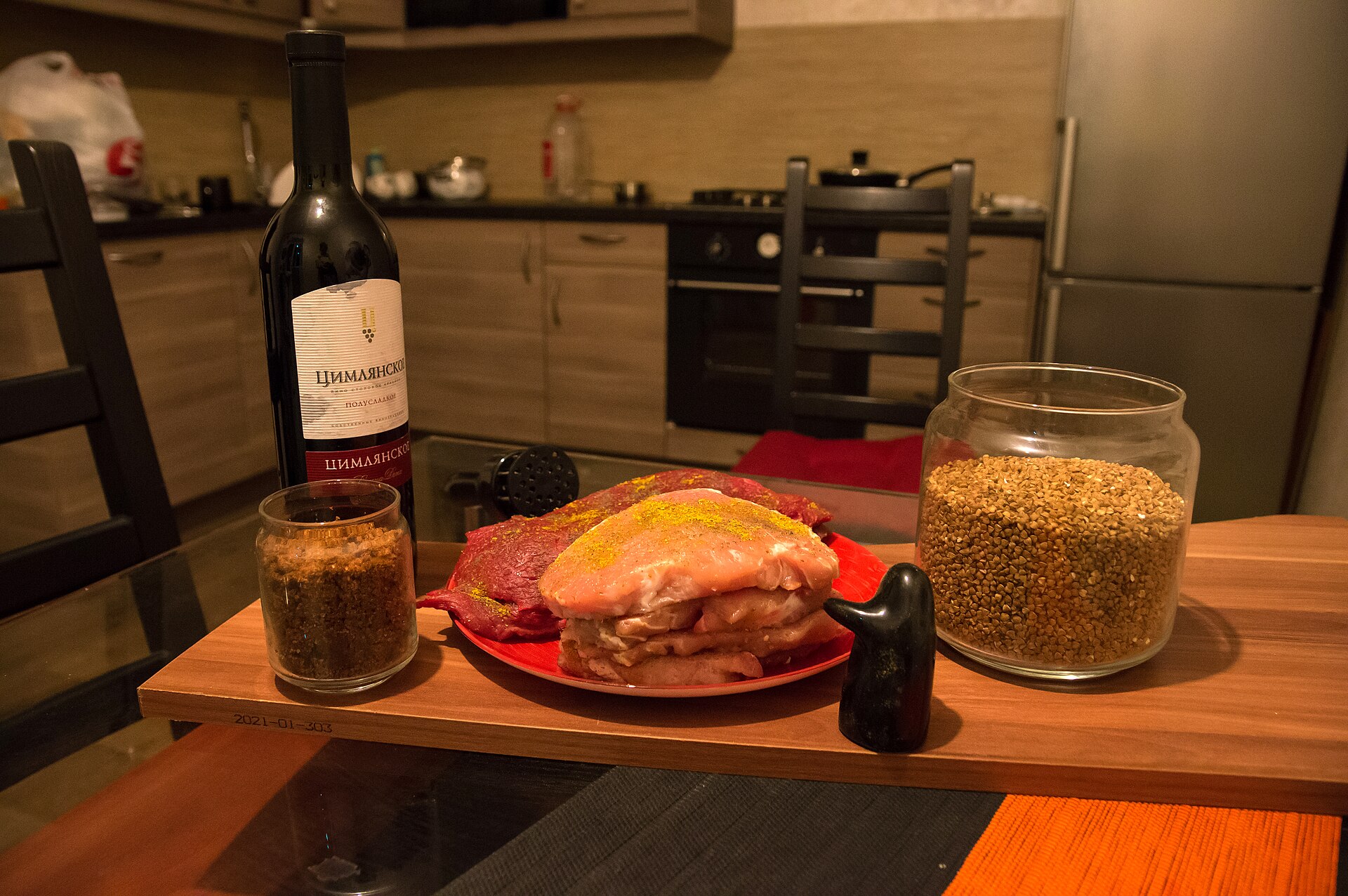
Image source: File:Cuts of pork, Cuts of beef, Kitchen, Rostov-on-Don, Russia.jpg · CC BY 4.0 via Wikimedia Commons
The best cut for a first smoke is the one that fits the time you have. Chicken and ribs teach temperature control in an afternoon; pork shoulder gives you a forgiving long cook; brisket demands the most planning. This comparison lays out the trade-offs before you buy the meat.
What makes a cut a good smoker
Smoking is indirect, low-heat cooking. USDA describes it as slowly cooking food indirectly over a fire, keeps the cooker between 225 and 300 degrees F, and notes that large cuts can take 4 to 8 hours - so the meat needs enough fat and connective tissue to stay moist through a long cook.
Lean, tender cuts such as filet or chicken breast are done fast and dry out when stretched. As a rule of thumb, the tougher the raw cut, the better a candidate it is.
- Smoking suits thick, whole-muscle cuts with fat and connective tissue.
- Cooker range per USDA: 225 to 300 degrees F.
- Large cuts can run 4 to 8 hours.
- Lean tender cuts are better grilled hot and fast.
Brisket: the long game
Brisket is the flagship of low-and-slow cooking and the biggest commitment on this list: a large, heavily exercised whole-muscle cut that rewards a long cook with tenderness it lacks when cooked fast.
USDA's minimum for whole beef cuts like brisket is 145 degrees F with a 3-minute rest, yet barbecue cooks routinely go well past it to soften connective tissue - USDA notes that consumers may cook to higher temperatures for personal preference. Budget the most time and fuel of any common smoking cut.
- USDA minimum for whole beef cuts: 145 degrees F plus 3 minutes' rest.
- Finishing far above the minimum is common and USDA-acknowledged.
- The longest cook of any common smoking cut.
- A full packer brisket is a weekend project.
Pork: shoulder, ribs, and belly
Pork shoulder, often sold as Boston butt, is the beginner's brisket: big and fatty enough for a long smoke but more forgiving, because it is pulled rather than sliced, which hides uneven spots. Whole pork cuts are safe at USDA's 145 degrees F plus a 3-minute rest, and pulled pork usually goes well above that until the connective tissue lets go.
Ribs are smaller and finish in a few hours, and pork belly smokes well - with a cure first it becomes homemade bacon, which Oregon State Extension treats as a low-smoke project finishing around 160 degrees F. Afternoon smoke: ribs or belly. Longer but forgiving: shoulder.
- Boston butt: forgiving, pulled, the usual first big cut.
- USDA minimum for whole pork cuts: 145 degrees F plus 3 minutes' rest.
- Ribs and belly finish in hours, not a full day.
- Belly becomes bacon after a cure (extension target: 160 degrees F).
Poultry and your first project
Chicken and turkey smoke fast because they race a dry-breast clock rather than dense connective tissue. USDA requires whole poultry to reach 165 degrees F everywhere, and a chicken is a same-afternoon smoke.
New to smoking? Work up the ladder: a whole chicken or a rack of ribs first to learn temperature control, then a pork shoulder, and save brisket for a free day and a cooker you trust. Match the cut to the equipment too: a narrow vertical smoker may handle ribs well but make a full packer brisket awkward, while a small grill may need a split cook or a smaller cut.
- Whole poultry: 165 degrees F in every part.
- Beginner ladder: chicken or ribs, then shoulder, then brisket.
- Bigger and tougher means longer and less forgiving.
- Pick the cut that fits the time you actually have.
Sources
Sources used for this page
Ethan Wilder (pen name)
Research-based guides · read the Editorial policy
Keep planning
More in Smoking Guides
- 01How to Season a Flat-Top Griddle: Oil, Layers, and CareTutorial · 6 min read
- 02How to Smoke a Brisket: a First-Timer's Plan From Trim to RestTutorial · 6 min read
- 033-2-1 Ribs: the Method, Temperatures, and TimingTutorial · 6 min read
- 04Smoker vs grill: do you need both?Comparison · 5 min read
- 05Flat-top griddle vs grill: what each does bestComparison · 5 min read