Equipment
Pellet grill maintenance: auger, ash, and off-season care
EWEthan Wilder (pen name)Published 2026-07-126 min read
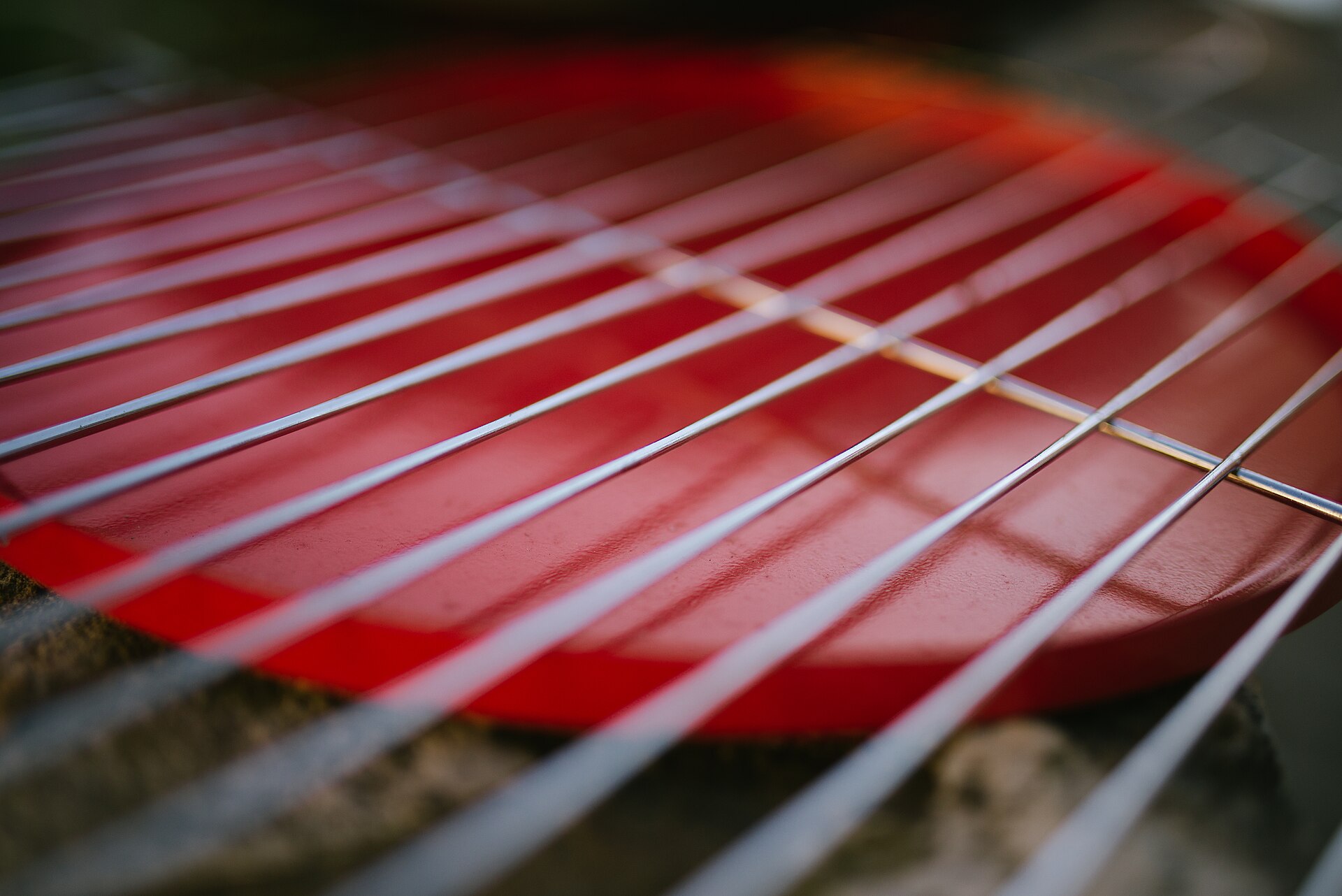
Image source: File:A vibrant red grill with shiny metal grates.jpg · CC BY 2.0 via Wikimedia Commons
A pellet grill is convenient only when its firepot, auger, hopper, and grease path stay clear. Use the routine below after the cook, after a heavy fatty meal, and before storage. The exact access panels differ by model, so use the owner's manual for anything that requires removing a guard or opening the controller housing.
Ash is normal; removal is the discipline
Manufacturer guidance is reassuring on one point: ash accumulation inside a pellet grill is normal. Traeger's support notes that some ash under the heat shield is expected on its newer models, and that buildup between scheduled cleanings should not affect how the grill runs. The problem starts when that ash never gets removed.
Their suggested cadence - vacuum out the ash at least every two months, and ideally after about every 24 hours of cook time - is a sensible benchmark for most pellet grills.
- Vacuum the firepot and barrel only when the grill is cold.
- Check that the firepot is seated correctly if ash seems excessive.
- Expect fatty cooks like brisket to dirty the barrel faster than vegetables or bread.
The hopper and auger: keep them dry
The auger feeds pellets from the hopper to the firepot, and its main enemy is moisture. Wet or aged pellets swell, break down into sawdust, and can clog the auger tube, which is why manufacturers advise emptying the hopper rather than leaving pellets in it for long storage.
Signs that a batch of pellets has gone bad are easy to spot: pellets look dull instead of shiny, crumble between your fingers, or show clumps, moisture, or excess sawdust in the bag. When a bag is compromised, remove the pellets from the hopper and vacuum the auger tube before adding fresh ones.
- Vacuum sawdust out of the hopper monthly, and more often if you cook weekly.
- Empty the hopper and vacuum the auger tube before long storage.
- Turn the grill off before putting your hands in the hopper.
Grease paths and the fire-safety side
Grease is the other half of the job. Drippings collect on the drip tray, heat baffle, and in a grease bucket or keg, so many makers recommend a deeper clean of the inside every 2 to 3 cooks, or roughly every 20 to 24 hours of cook time. Degreasing on that rhythm keeps flare-ups and temperature swings unlikely.
Wait for the grill to cool before handling grease containers, and use dedicated tools: an ash vacuum for the firepot and disposable cloths or paper towels for grease rather than washing it down a sink.
Before cleaning, switch the grill off, unplug it, and wait until the fire and ash are completely cold. Do not pour water into the firepot or wash grease into a drain. Scrape solid residue into a disposable container, then wipe the remaining film from the tray and barrel.
- Keep the grease bucket or keg from filling past its marked level.
- Degrease the barrel and drip tray after heavy, fatty cooks.
- Disconnect the power before any maintenance.
Off-season and the first cook of spring
Before the grill sits unused for weeks, empty the hopper and give the interior a final vacuum so old pellets and residue do not draw moisture and mold through the off-season. Cover the grill, and store it away from snow, rain, and standing water.
In spring, open the grill and inspect the grates, firepot, and interior walls for mold or mildew before the first cook, and run a full clean if anything looks off. Following the routine above through the season is exactly what keeps that spring inspection quick.
After storage, check the power cord, gasket, grease bucket, and temperature probe before the first fire. If pellets have swollen or the firepot contains damp sawdust, remove it rather than trying to burn through a blocked feed path.
- Empty the hopper and seal stored pellets in a dry container.
- Look for mold or mildew after winter storage before cooking.
- Unplug the grill and confirm ash is cold before cleaning.
Sources
Sources used for this page
Ethan Wilder (pen name)
Research-based guides · read the Editorial policy
Keep planning
More in Equipment
- 01How to Choose a Pellet Grill: Size, Features, and What to SkipEquipment · 5 min read
- 02Pellet Grills 101: How They Work and Who They Actually SuitEquipment · 5 min read
- 03How to Choose Your First Smoker: Pellet, Charcoal, Electric, or KamadoEquipment · 5 min read
- 04Smoker vs grill: do you need both?Comparison · 5 min read
- 05Flat-top griddle vs grill: what each does bestComparison · 5 min read