Consumables
Meat thermometers: probe types, placement, and target temps
EWEthan Wilder (pen name)Published 2026-07-226 min read
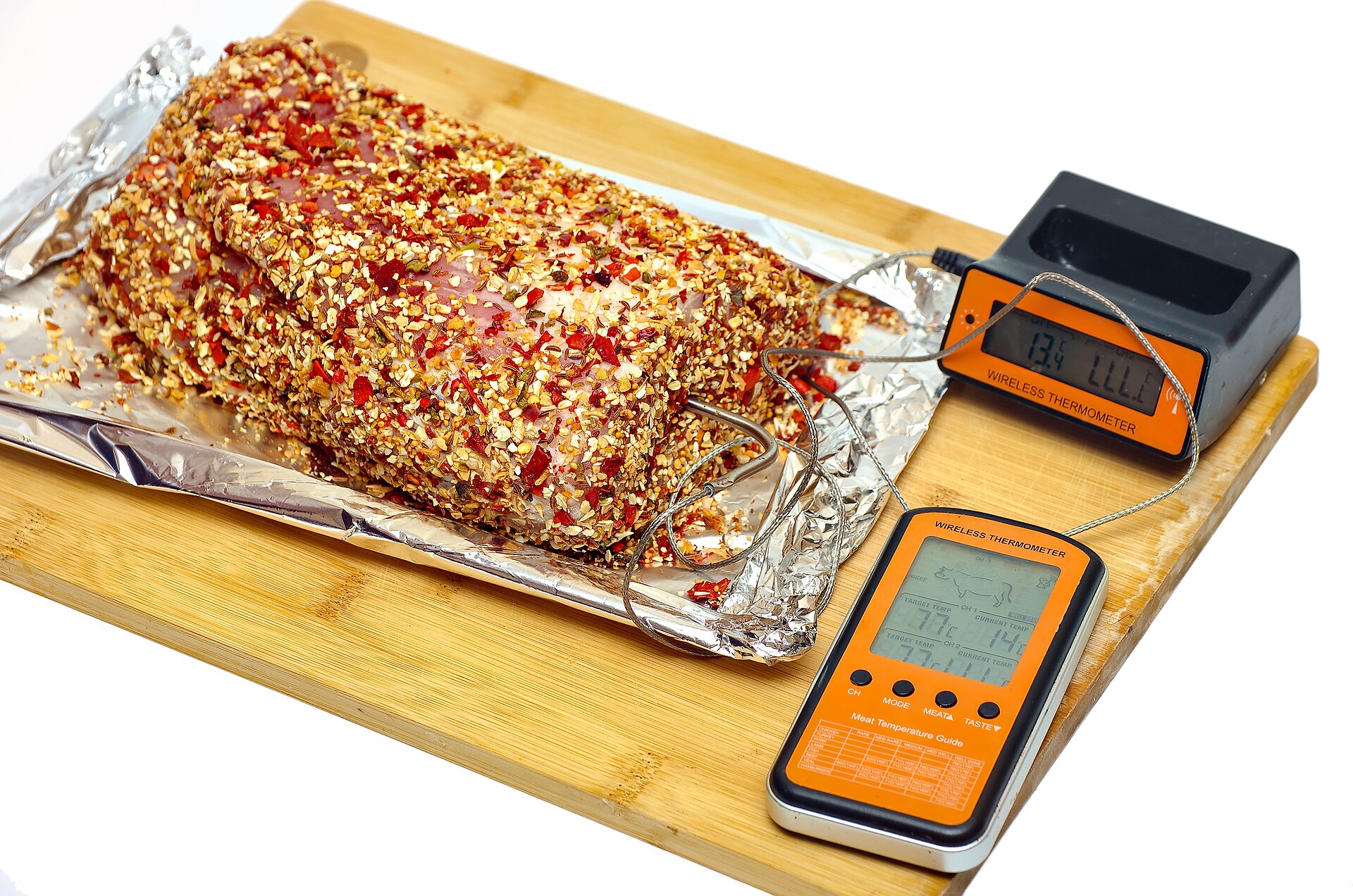
Image source: File:Кулинарный термометр.jpg · CC BY-SA 4.0 via Wikimedia Commons
A thermometer answers two different questions: whether food has reached a safe internal temperature and whether a long cook has reached the texture you want. Pick the probe style for the cook, place it in the right part of the food, and check the instrument before trusting it on a large roast.
The probe styles that earn their place
Digital instant-read thermometers - thermocouple and thermistor types - report in a few seconds and are the everyday tool for checking steaks, chops, and finished meat. Leave-in probes with a cable let you monitor a brisket or pork shoulder through a long smoke without opening the cooker and losing heat.
Wireless probes add the convenience of checking from inside the house, and many setups pair a meat probe with a second probe that tracks the air temperature inside the cooker. USDA guidance is direct about why any of this matters: color and feel are not reliable indicators of safety, and a food thermometer is the dependable way to know meat is done.
- Instant-read digital: fast checks at the end of a cook.
- Leave-in wired probes: long smokes with the lid closed.
- Wireless probes: monitoring without standing at the grill.
Where to probe and how to check
Insert the probe into the thickest part of the meat, away from bone, fat, and gristle, which read hotter than the surrounding meat. On irregular cuts, take readings in several spots and trust the lowest number, since that is the area least likely to be done.
Large roasts deserve multiple checks: the flat and the point of a brisket cook at different rates, so probe both zones before pulling. Verify your thermometer's accuracy per its instructions - the ice-water test is the standard method - and wash the probe between raw and cooked checks to avoid cross-contamination.
For a thin steak or chop, insert from the side so the sensing tip reaches the center. For a whole bird, check the thickest breast and the innermost thigh; for a large roast, take more than one reading because one warm pocket can give a false sense of doneness. Pull the probe out and wash it before it touches cooked food.
- Probe the thickest area, clear of bone and fat.
- Take several readings on big, uneven cuts.
- Wash the probe between raw and cooked checks.
The target numbers: USDA's chart
USDA recommends these minimum internal temperatures: whole cuts of beef, pork, lamb, and veal - steaks, roasts, and chops - reach 145°F followed by a three-minute rest; ground meats reach 160°F; and all poultry, whole or ground, reaches 165°F. Fish is safe at 145°F, and leftovers reheat to 165°F.
Rest time is part of the safety equation, not optional: the three-minute rest after whole cuts reach 145°F lets the meat finish cooking evenly, which is why USDA lists it on the temperature chart rather than treating it as a serving suggestion.
Thermometer habits that prevent guesswork
Smokers present their own trap: the meat probe measures the meat, while a separate probe in the chamber measures air, and the air temperature is not the meat temperature. Decide on the meat probe's reading, not the chamber reading or the clock.
Keep spare batteries, store probes out of the weather, and replace probes whose cables fray or whose readings start jumping. A dead thermometer at hour twelve of a long smoke is the one failure that actually matters.
A simple pre-season check catches many failures: place an instant-read probe in a properly prepared ice-water slurry and compare the reading with 32°F, following the thermometer maker's method. A damaged cable, loose tip, or jumping display is a replacement problem, not a number to average out.
- Judge doneness by the meat probe, never the chamber gauge.
- Calibrate or check accuracy before the season starts.
- Replace damaged probes before a long cook, not during it.
Sources
Sources used for this page
Ethan Wilder (pen name)
Research-based guides · read the Editorial policy
Keep planning
More in Accessories
- 01How to Choose a Pellet Grill: Size, Features, and What to SkipEquipment · 5 min read
- 02Pellet Grills 101: How They Work and Who They Actually SuitEquipment · 5 min read
- 03How to Choose Your First Smoker: Pellet, Charcoal, Electric, or KamadoEquipment · 5 min read
- 04Smoker vs grill: do you need both?Comparison · 5 min read
- 05Flat-top griddle vs grill: what each does bestComparison · 5 min read