Comparison
Kamado vs kettle: two charcoal styles compared
EWEthan Wilder (pen name)Published 2026-08-055 min read
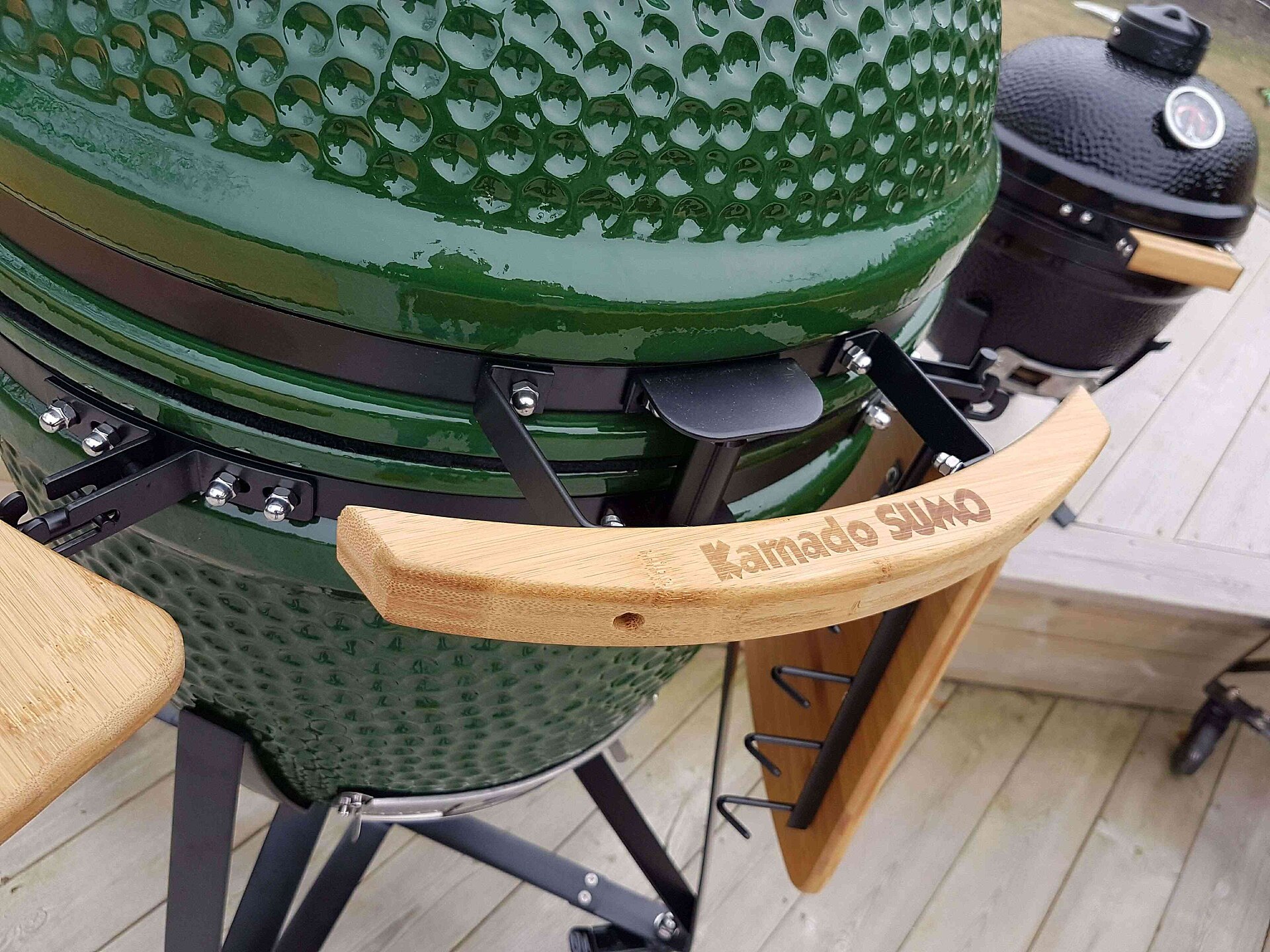
Image source: File:Kamado Ceramic Grill.jpg · CC BY-SA 4.0 via Wikimedia Commons
A kettle is light, quick, and inexpensive to enter. A kamado is heavy, insulated, and better suited to holding a low fire for hours. Both can grill and smoke; the useful comparison is how much heat stability, capacity, and moving effort your patio and cooking habits can support.
Steel bowl vs ceramic egg
The classic kettle is a domed steel bowl on legs with a bottom vent and a top vent, charcoal sitting on a grate near the base. It lights fast, responds quickly when you open the vents, and cools down quickly when you are done. A kamado is egg-shaped, with thick ceramic walls that soak up heat and hold it, with airflow controlled through top and bottom vents.
That material difference drives everything else. Steel is light and responsive. Ceramic is heavy and insulating: a kamado takes longer to come up to temperature and much longer to cool down, but it holds a steady low temperature through a long smoke without constant fiddling.
Heat control and fuel economy
Closed and running, a kamado behaves like a charcoal-fired convection oven. The round shape circulates hot air around the food, and the insulated walls keep that heat inside, which is why manufacturers say the design burns less charcoal than a standard barbecue and holds very stable temperatures. That stability is what makes long, mostly unattended smokes practical.
A kettle can also run low and slow: bank the coals to one side, put the meat on the other, and set both vents. But thin steel loses heat fast, so through a long cook you will refuel and adjust more often. For quick grilling, the kettle is the faster, nimbler tool of the two.
Range, weight, and money
A kamado spans an unusually wide range on one cooker: from gentle smoke to very hot sears and pizza temperatures with a stone in place, all by opening or closing the vents. That versatility and insulation come at a price in weight, cost, and care, since the ceramic shell needs protection from hard knocks and weather, though wheeled bases solve much of the moving problem.
Kettles are lighter, simpler, cheaper to enter, and famously durable, at the cost of less temperature stability and range. As categories: if you grill most nights and want an affordable, low-maintenance cooker, the kettle covers you; if you smoke often and want one machine that also grills hot and bakes, the kamado earns its higher price.
The temperature rule stays the same
A kettle's quick response and a kamado's heat retention can change timing, but neither changes the safety check. Read the meat: 165°F for poultry, 160°F for ground meat, and 145°F for whole beef, pork, or lamb cuts, then give those whole cuts a three-minute rest.
- Mostly quick grills on a budget: a kettle covers you.
- Frequent smoking plus high-heat versatility: a kamado earns its price.
- Limited patio space or a need to move the cooker: a kettle is lighter.
- Set it and trust it through a long cook: kamado insulation wins, if you can wait out the warm-up.
Sources
Sources used for this page
Ethan Wilder (pen name)
Research-based guides · read the Editorial policy
Keep planning
More in Comparisons
- 01Smoker vs grill: do you need both?Comparison · 5 min read
- 02Flat-top griddle vs grill: what each does bestComparison · 5 min read
- 03Pellet grill vs gas grill: which matches your cooking styleComparison · 5 min read
- 04How to Choose a Pellet Grill: Size, Features, and What to SkipEquipment · 5 min read
- 05Pellet Grills 101: How They Work and Who They Actually SuitEquipment · 5 min read