Equipment
How to Choose a Gas Grill: Burners, BTUs, and Materials
EWEthan Wilder (pen name)Published 2026-07-085 min read
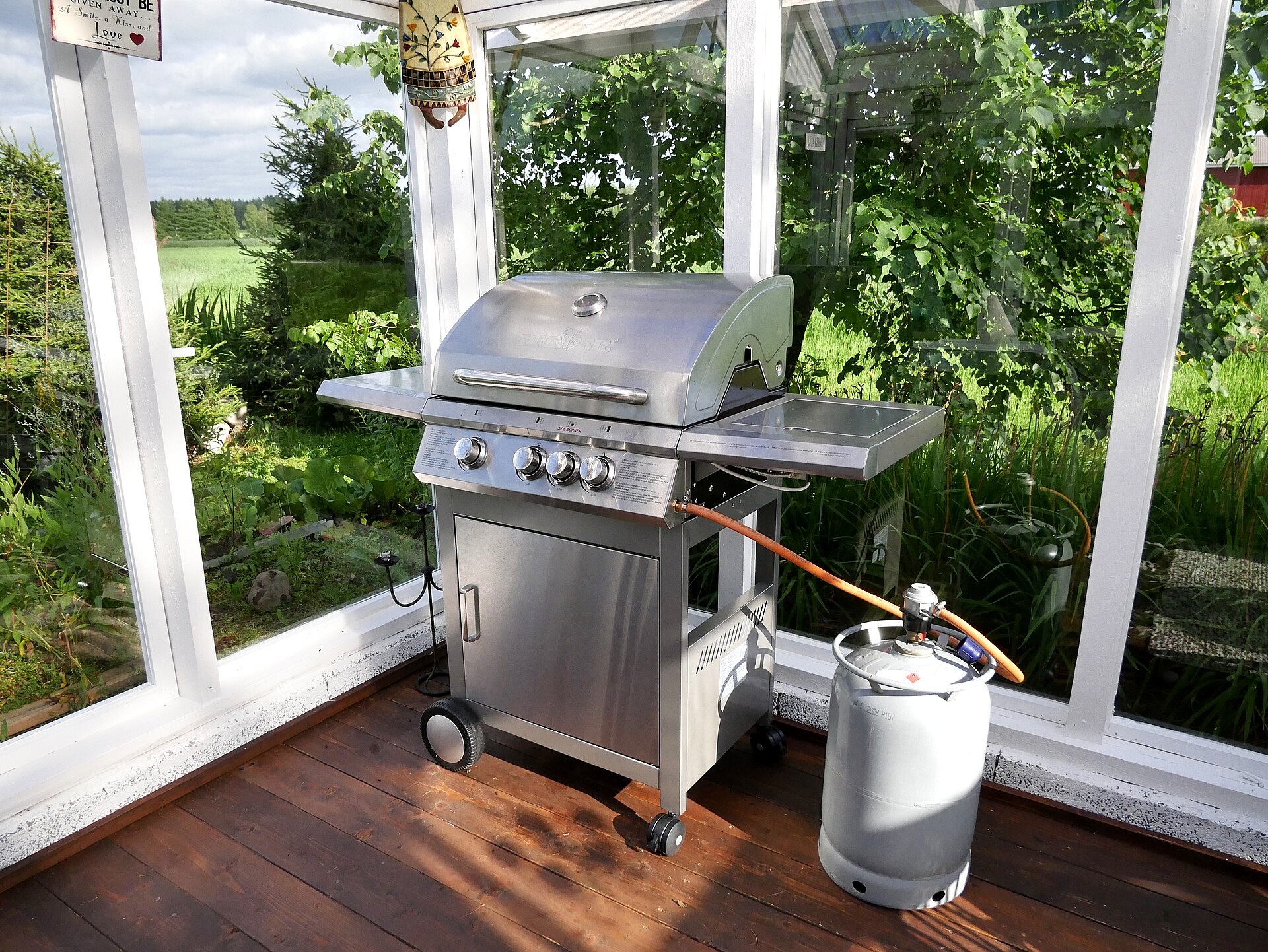
Image source: File:Gas grill 20170807.jpg · CC BY-SA 4.0 via Wikimedia Commons
Gas-grill specifications matter only when they change the way food cooks. Count the heat zones you will use, treat BTUs as one input rather than a quality score, inspect the parts that live outdoors, and settle the fuel connection before you bring a grill home.
Burners: how many heat zones do you cook with
The number of burners roughly equals the number of heat zones you can set at once. Two burners let you run one side hot and the other off for indirect cooking; three or four add flexibility for different foods. What matters is whether the layout supports the two-zone cooking you will actually use, and gas grills regulate temperature directly with knobs, which makes them quick to adjust.
Many cooks find two or three burners cover a typical family cookout; four or more shine when you cook for a crowd or want a low zone beside a hot one.
BTUs: what the number means and what it hides
BTU stands for British thermal unit, the energy needed to raise one pound of water by one degree Fahrenheit, so a grill's total BTU rating describes potential heat output. A higher number is not automatically better: Weber's own guidance says a grill with a higher BTU rating does not necessarily cook better than one rated lower, because efficiency and design matter.
In practice, compare BTUs only between grills of similar size, alongside cooking area, burner layout, and materials: a large cookbox with too little heat struggles to sear, and a small one with excess heat just wastes fuel.
Materials and build quality
The parts that rust are the ones you touch and see: the cart, cookbox, lid, and cooking grates. Porcelain-enameled steel and coated cast iron resist weather well, and stainless steel is common on pricier grills, but not all stainless is equal, so check gauge and grade rather than trusting the label.
Grill grates also shape your food: cast iron holds and delivers heat but needs oiling against rust, while stainless and porcelain-coated grates need less care. Judge the whole build, welds, hinges, and lid fit, because the grill lives outdoors and construction quality keeps it safe and durable.
Propane or natural gas: decide before you buy
Gas grills split into two fuel systems. Liquid propane runs from a cylinder you connect, refill, or exchange yourself; modern cylinders carry overfill-prevention devices so they are never filled past about 80 percent. Natural gas is plumbed into your home and is usually connected by a professional.
Propane is portable and easy to swap, and a spare cylinder prevents running dry mid-cook. Natural gas means no tanks or refills but ties the grill to a fixed connection point, so confirm where the grill will live and whether a line is practical there first.
Most gas grills are sold in both configurations, so check the fuel option on the models you compare.
Size, extras, and what to skip
Size the primary cooking surface to the biggest cook you host, remembering that many gas grills add a secondary warming rack on top. Cooking surface is quoted in square inches, but how that space divides into heat zones matters more than the total.
Extras like side burners, rotisserie kits, and sear stations are worth the step-up only if you will use them. A thermometer in the lid, a well-fitting cover, and a grill that is easy to clean will do more for most cooks than a row of rarely touched gadgets.
Sources
Sources used for this page
Ethan Wilder (pen name)
Research-based guides · read the Editorial policy
Keep planning
More in Equipment
- 01How to Choose a Pellet Grill: Size, Features, and What to SkipEquipment · 5 min read
- 02Pellet Grills 101: How They Work and Who They Actually SuitEquipment · 5 min read
- 03How to Choose Your First Smoker: Pellet, Charcoal, Electric, or KamadoEquipment · 5 min read
- 04Smoker vs grill: do you need both?Comparison · 5 min read
- 05Flat-top griddle vs grill: what each does bestComparison · 5 min read