Equipment
How to choose a flat-top griddle: size, burners, and build
EWEthan Wilder (pen name)Published 2026-07-166 min read
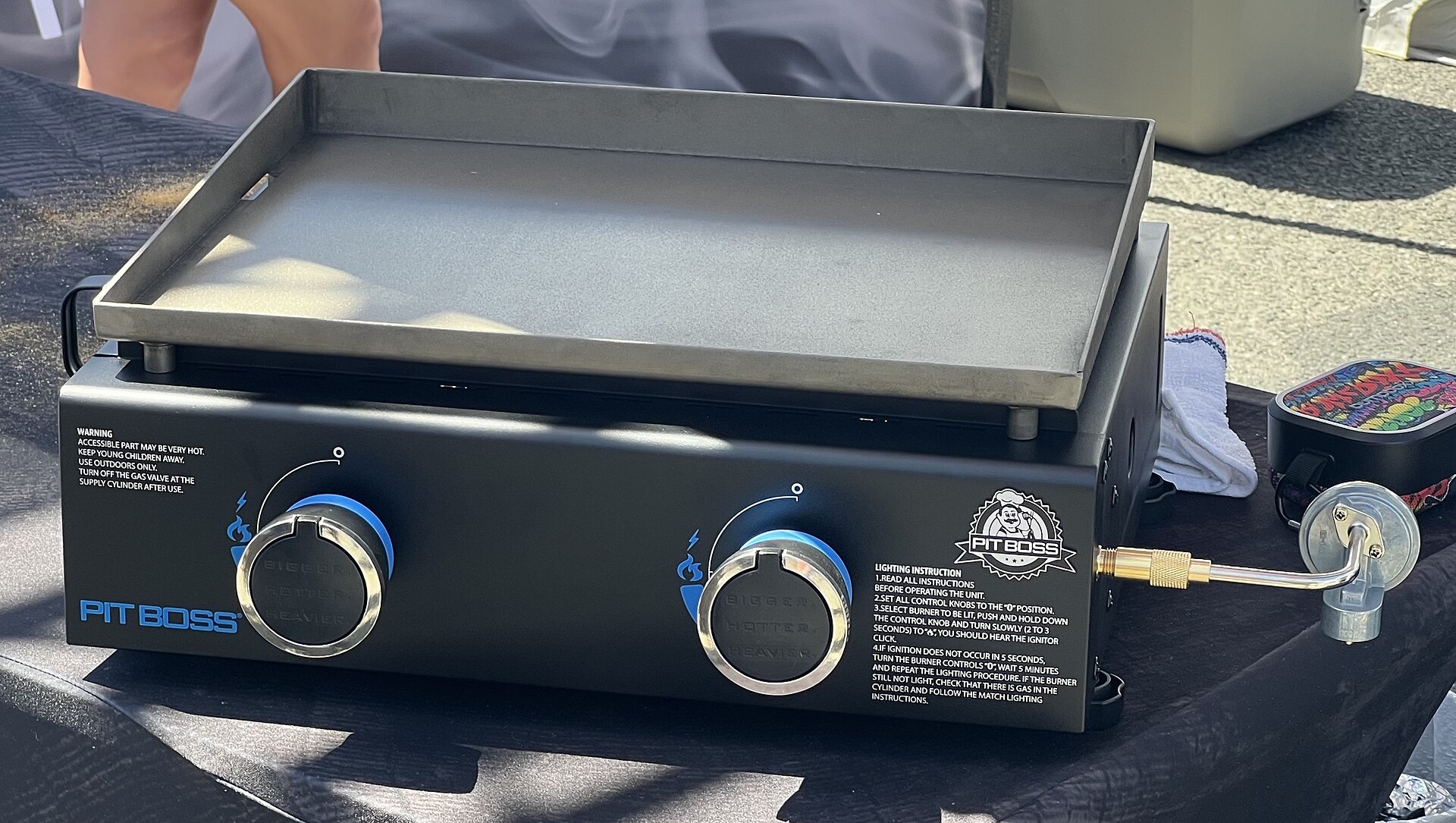
Image source: File:Pit Boss Tabletop Griddle Sonoma 2026.jpg · CC BY-SA 4.0 via Wikimedia Commons
A flat-top griddle is useful because its steel plate changes what can be cooked and how grease is handled. Size the surface for the food you actually make, compare burner zones instead of chasing a single BTU number, and check how much cleaning and seasoning the plate will require.
Size the cooking surface to your crowd
Manufacturers size griddles by cooking area, and the shorthand many use is 'how many patties fit at once.' A compact unit suits one or two people; a mid-size surface handles a family of four to six; the largest station-style griddles are built for regular entertaining and big batches.
Consider depth as well as width. A wide, shallow surface holds a row of burgers, while a deeper plate gives you room to stage several zones at different heats - warm on one side, searing on the other - which is where griddle cooking gets fun.
- Cook area, not burner count, decides how much fits at once.
- Two people: compact. Family of four to six: mid-size. Entertaining: station size.
- Measure your patio or deck footprint before you shop.
Burners and bTUs: what the number actually means
BTU is an input rating - the heat a burner can deliver, not the temperature you will see on the surface. Two griddles with similar total BTUs can cook very differently depending on burner layout, wind protection, and how evenly the steel plate conducts heat, so treat the number as a starting point, not a verdict.
More burners mean more independent heat zones. With a two-burner unit you can hold one side low while the other sears, which is why burner count tends to climb as cooking area grows. For most home cooks, a layout with independent controls matters more than peak BTU output.
- Divide total BTUs by burner count to compare like with like.
- Independent heat zones beat a single huge flame for everyday cooking.
- Wind protection and a lid change real-world heat more than spec numbers.
Build, seasoning, and grease management
The cooking surface is usually cold-rolled steel, which builds a seasoned layer and needs regular oiling to stay rust-free, or a rust-resistant finish that needs less babying. Match the surface to the effort you will actually put in: a bare steel plate rewards care, while a coated or rust-resistant surface forgives a skipped oiling.
Grease management matters more on a griddle than on a grill because there is nowhere for drippings to hide. Look at how the surface drains - front or rear collection - and whether the grease cup is easy to reach and empty. Also settle the propane versus natural gas question before you buy, since conversion usually needs the right kit and sometimes a professional hookup.
What to check before you buy
Run through the daily reality before the spec sheet: where the griddle will live, how close it is to a fuel source, whether you want a full stand or a tabletop unit, and how easily the grease cup and griddle top come out for cleaning. These decide whether the thing gets used or becomes patio furniture.
Finally, compare warranties and parts availability the way you would for any outdoor appliance. Burners, regulators, and griddle tops are wear items, and a brand with easily ordered parts is worth more than one with a longer warranty and no parts.
- Pick the fuel first: propane tank, natural gas line, or a model that converts.
- Confirm the grease cup and surface come apart for cleaning.
- Check replacement-part availability before you fall in love with a feature set.
Sources
Sources used for this page
Ethan Wilder (pen name)
Research-based guides · read the Editorial policy
Keep planning
More in Equipment
- 01How to Choose a Pellet Grill: Size, Features, and What to SkipEquipment · 5 min read
- 02Pellet Grills 101: How They Work and Who They Actually SuitEquipment · 5 min read
- 03How to Choose Your First Smoker: Pellet, Charcoal, Electric, or KamadoEquipment · 5 min read
- 04Smoker vs grill: do you need both?Comparison · 5 min read
- 05Flat-top griddle vs grill: what each does bestComparison · 5 min read