Consumables
Dry rubs: ratios, when to apply, and what actually sticks
EWEthan Wilder (pen name)Published 2026-07-245 min read
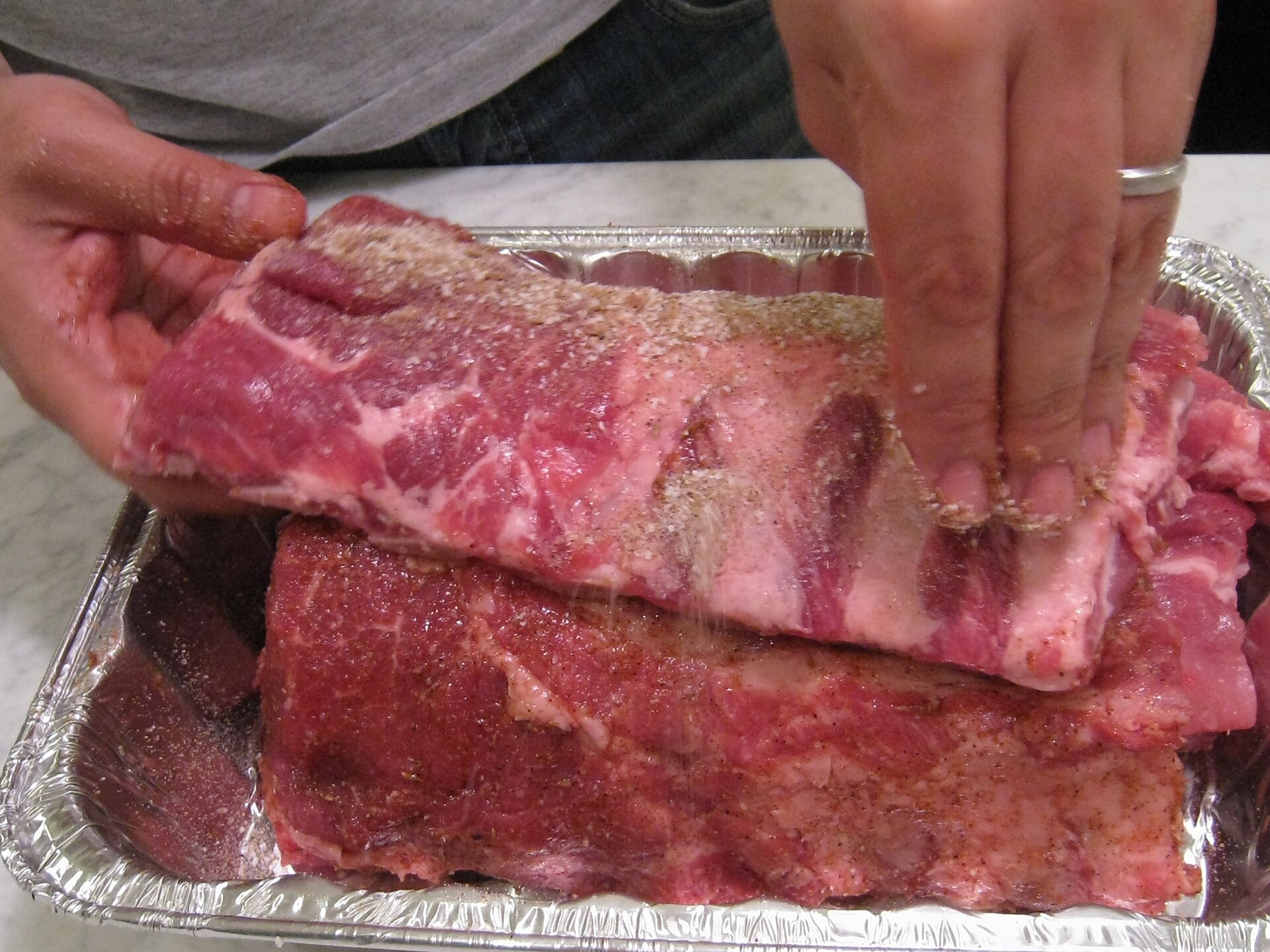
Image source: File:Applying a spice rub to pork ribs for a barbecue - 20080329.jpg · CC BY 2.0 via Wikimedia Commons
A dry rub is a seasoning system, not a magic formula. Salt changes how the meat is seasoned over time; sugar and spices change flavor and browning. Start with a simple ratio, adjust it for the heat of the cook, and keep the raw-meat handling separate from the jar you plan to use again.
The parts of a rub and the ratio logic
Most rubs build from the same parts: salt, a sweetener, heat from chile or pepper, and aromatics. Salt is the workhorse - it seasons meat deeply, and given time it draws surface moisture out and reabsorbs it, which firms texture and seasons past the surface.
A workable weighed starting ratio is 2:1:1 salt:sugar:coarse black pepper; for a 4-pound shoulder that is about 2 tablespoons salt, 1 tablespoon sugar, and 1 tablespoon pepper, with garlic or chile added to taste. For cuts you plan to cook hot and fast, sugar in quantity scorches, so skew the ratio savory - or leave the sugar off and add it late.
Measure the first batch by weight if you can. Volume varies with the grind of salt, sugar, and pepper, so two spoons that look equal can deliver very different salt levels. Record the ratio and the cut you used; the next adjustment should be based on the result, not a new guess.
- Salt carries the seasoning; it is the non-negotiable part.
- Sugar builds sweetness and bark but burns at high heat.
- Pepper, chile, garlic, and herbs are the flavor layer - adjust freely.
When to apply: timing is a lever
Rubbing hours ahead - or the night before, refrigerated - lets salt penetrate, the effect often called a dry brine, which seasons past the surface and firms the texture. Rubbing just before the cook keeps a crisp surface layer and works fine for hot grilling.
On a smoker running low and slow, sugar-heavy rubs have time to caramelize instead of burn, so earlier application is forgiving. Whatever the timing, keep raw-meat handling clean: apply with clean hands, and reserve a portion of rub for finishing rather than dipping back into the container with meat-contaminated fingers.
- Hours to overnight ahead: deeper seasoning from the salt.
- Right before the cook: a crisper, surface-level layer.
- Refrigerate rubbed meat until the cook starts.
What actually makes rub stick and stay
Adhesion is about surface moisture, not pressure. Pat the meat dry, apply the rub, and let it sit a few minutes so the moisture on the surface glues the layer on; a thin coat of oil can help on very dry cuts, and a little moisture helps on lean ones.
Quantity is a feel thing: aim for an even coat that covers the surface rather than a thick crust, and let the first layer absorb before adding more. Rub that falls off in the smoker was never going to help; rub that stays forms the bark.
If the rub slides off, the surface is usually wet with purge or the coat is too heavy. Pat the meat dry, add a thin layer, and leave it alone for a few minutes before moving it. More pressure does not make a thicker coat adhere.
- Dry the surface first - moisture is your glue, not your enemy.
- An even, light coat beats a thick one that sheds.
- Add a second layer only after the first has absorbed.
The safety line never moves
USDA guidance applies no matter the rub: meat must still reach its safe minimum internal temperature, and hands and surfaces stay clean during prep. Poultry, whole or ground, cooks to 165°F; ground meats to 160°F; and whole cuts of beef, pork, lamb, and veal to 145°F with a three-minute rest.
Time in the fridge is seasoning, not preservation. Keep the cold chain until the cook starts, and finish with a thermometer rather than a clock - rubs change flavor, never safety math.
- Rub timing changes flavor, not target temperatures.
- Keep rubbed meat refrigerated until it hits the cooker.
- Finish with a thermometer: 145°F + rest, 160°F ground, 165°F poultry.
Sources
Sources used for this page
Ethan Wilder (pen name)
Research-based guides · read the Editorial policy
Keep planning
More in Accessories
- 01How to Choose a Pellet Grill: Size, Features, and What to SkipEquipment · 5 min read
- 02Pellet Grills 101: How They Work and Who They Actually SuitEquipment · 5 min read
- 03How to Choose Your First Smoker: Pellet, Charcoal, Electric, or KamadoEquipment · 5 min read
- 04Smoker vs grill: do you need both?Comparison · 5 min read
- 05Flat-top griddle vs grill: what each does bestComparison · 5 min read